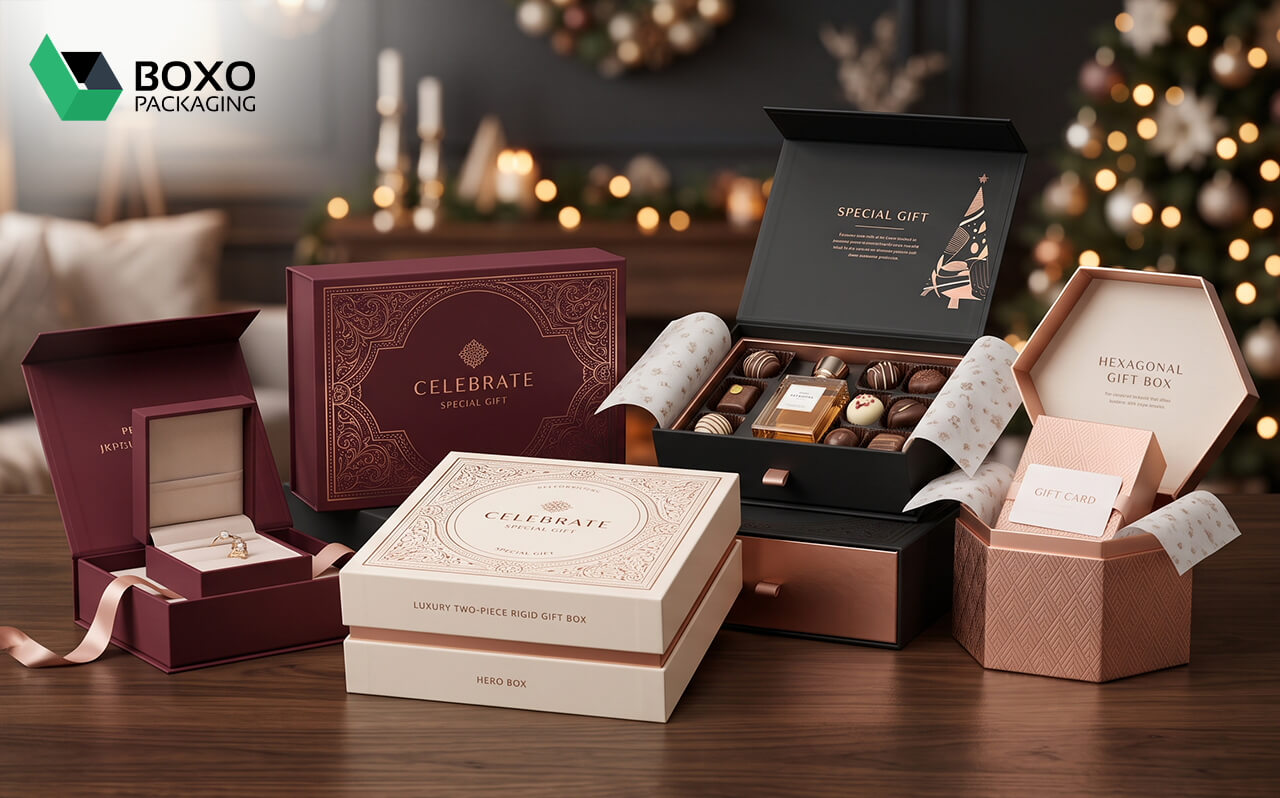
Every order that leaves a business is a small, unavoidable moment of brand exposure, whether a company treats it that way or not. A plain, unbranded box says nothing. A thoughtfully printed one says something specific, and it says it consistently, order after order, without requiring a single additional ad dollar to do so. For brands built around gifting in particular, this repeated exposure matters more than it might in other categories, since gift purchases already carry heightened attention and emotional weight before the box is even opened. Printed gift packaging turns that natural attention into a reliable, low-cost brand-building tool that most companies use far less deliberately than they could.
This article looks at how printed gift packaging actually reinforces brand identity, what design choices make that reinforcement effective, and how brands can approach printed packaging without overcomplicating the process.
Why Gift Packaging Carries Extra Brand-Building Weight
A customer buying something for themselves might toss aside plain packaging without a second thought. A gift, whether it’s being shipped directly to a recipient or wrapped and handed over in person, gets noticed differently. There’s an audience, a moment, a heightened sense of occasion, and packaging becomes part of that moment rather than something discarded immediately. Printed branding placed into that context reaches people at a point of genuinely elevated attention.
Gifting Often Introduces a Brand to New People
Unlike a self-purchase, a gift frequently introduces a brand to someone who wasn’t the one who bought it. The recipient may have never heard of the company before opening the box. Printed packaging becomes, in effect, a first marketing touchpoint for an entirely new potential customer, delivered directly and personally rather than through an ad they might scroll past.
The Unboxing Moment Is Emotionally Charged
Gift-giving carries emotional significance that ordinary purchases don’t always have. That emotional context makes the unboxing moment more memorable, and by extension, makes whatever branding appears during that moment more likely to stick in someone’s memory. A logo seen during a meaningful, emotionally positive experience tends to create a stronger association than the same logo seen in a neutral, transactional context.
How Printed Packaging Actually Builds Brand Identity Over Time
Repetition Builds Recognition
Brand identity isn’t built from a single strong impression, it’s built from consistent, repeated exposure that gradually becomes familiar. Every printed box that goes out the door reinforces the same visual identity: the same logo treatment, the same color palette, the same overall design language. Over enough orders, customers and gift recipients start to recognize that identity instinctively, which shortens the distance between seeing a package and associating it with a specific brand.
Design Choices Encode Brand Personality
Color, typography, and overall visual tone on packaging communicate personality just as much as a website or an ad campaign does. A playful, colorful design signals something different than a restrained, minimalist one, and printed packaging lets a brand extend that same personality into a physical, tactile format that customers interact with directly, not just view on a screen.
It Extends the Brand Experience Beyond the Transaction
Many gift boxes, especially well-designed ones, get kept and reused rather than thrown away immediately, for storage, for regifting supplies, or simply because they look nice enough to hold onto. Every time that packaging is seen again, the brand identity printed on it gets another quiet moment of reinforcement, well after the original purchase is complete.
It Creates Shareable, Organic Marketing Content
Gift unboxing is one of the more commonly shared moments on social media, whether that’s a birthday post, a holiday reveal, or a simple product recommendation. Distinctive printed packaging gives people a reason to include the box itself in that content, extending brand visibility to an audience well beyond the original customer, at no additional marketing cost.
What Makes Printed Gift Packaging Actually Effective
Consistency Across the Entire Order Experience
Brand identity gets diluted when packaging elements don’t align, mismatched colors between the outer box and interior tissue, an unbranded shipping label paired with a beautifully designed inner box, an inconsistent logo treatment across different product lines. Effective printed packaging maintains a consistent visual identity across every touchpoint a customer or recipient sees, not just the most visible surface.
Design That Matches the Occasion
Gift packaging benefits from feeling appropriately celebratory or considered, depending on the brand’s tone. A design that feels rushed, generic, or purely functional undercuts the emotional context gifting naturally provides, while a design that matches the moment’s significance reinforces it.
Quality That Matches the Printed Design
Beautiful printing on flimsy or low-quality material creates a disconnect that undermines the overall impression. The physical material needs to support the design ambition, sturdy board, a satisfying closure, appropriate weight, so the printed branding feels like part of a considered whole rather than a decorative layer applied to inadequate packaging underneath.
Restraint Where It Counts
Not every printed detail needs to shout for attention. A well-placed logo, a distinctive color choice, or a single strong design element often communicates brand identity more clearly than packaging crowded with multiple competing messages. Especially for gift packaging, where the emotional tone matters as much as the information conveyed, simplicity tends to leave a stronger impression.
Practical Steps for Using Printed Gift Packaging to Build Brand Identity
Start with a consistent core design and apply it universally. Rather than designing different packaging for different products or occasions, establishing one strong, consistent visual identity across the majority of orders builds recognition faster than frequent variation.
Extend branding to every visible touchpoint, not just the main box. Tissue paper, inserts, thank-you cards, and even shipping labels all contribute to the overall impression, and inconsistency across these smaller elements can undercut an otherwise strong primary design.
Invest in one or two standout printing techniques rather than many small details. A foil-stamped logo or a distinctive color combination tends to create a stronger, more memorable impression than trying to include every available printing option within a limited budget.
Reassess design periodically without changing it too often. Brand identity benefits from stability over time. Occasional refinement makes sense, but frequent redesigns interrupt the recognition-building process that consistent packaging is meant to support.
Test how packaging performs specifically in a gifting context, not just for standard shipped orders, since presentation quality and unboxing experience matter more when a product is intended as a gift than when it’s purchased for personal use.
The Bottom Line
Printed gift packaging strengthens brand identity because it puts a brand’s visual identity directly in front of customers and recipients at a moment of heightened attention, repeated consistently across every single order that goes out the door. That repetition, combined with the emotional weight gifting naturally carries, makes packaging one of the more efficient and low-cost tools available for building lasting brand recognition. For brands that treat packaging as a real extension of their identity rather than an afterthought, every order becomes a small, reliable opportunity to reinforce who they are, delivered directly into the hands of the people who matter most.
FAQs
1. Does printed packaging really make a measurable difference in brand recognition?
While it’s hard to isolate packaging as a single variable, consistent visual branding across repeated customer touchpoints is a well-established principle in building recognition. Printed packaging functions the same way other consistent branding elements do, gaining effectiveness through repeated, familiar exposure over time.
2. Is printed gift packaging worth the extra cost for a small brand?
For brands where gifting represents a meaningful portion of sales, the investment often pays off through improved customer perception, increased social sharing, and stronger repeat recognition. Starting with a simple, consistent design keeps the added cost manageable while still capturing much of the branding benefit.
3. Should shipping labels and interior packaging elements be branded too?
Ideally, yes. Consistency across every visible touchpoint, not just the main box, reinforces brand identity more effectively than a single well-designed element surrounded by generic, unbranded components.
4. How often should gift packaging design be updated?
There’s no fixed schedule, but frequent changes can undercut the recognition-building value of consistent packaging. Most brands benefit from maintaining a stable design over an extended period, revisiting it only for clear strategic reasons like a rebrand or a significant shift in product positioning.
5. Can minimal or simple designs still strengthen brand identity effectively?
Yes, often more effectively than complex designs. A single, well-executed design element, a distinctive logo treatment, a specific color, tends to be more memorable and recognizable than packaging crowded with multiple competing details.
6. Does printed gift packaging need to look different from a brand’s standard product packaging?
Not necessarily, though some brands choose a slightly more elevated or celebratory design for gift-specific packaging. What matters most is that any variation still stays visually consistent with the brand’s overall identity, rather than feeling disconnected from how the brand presents itself elsewhere.