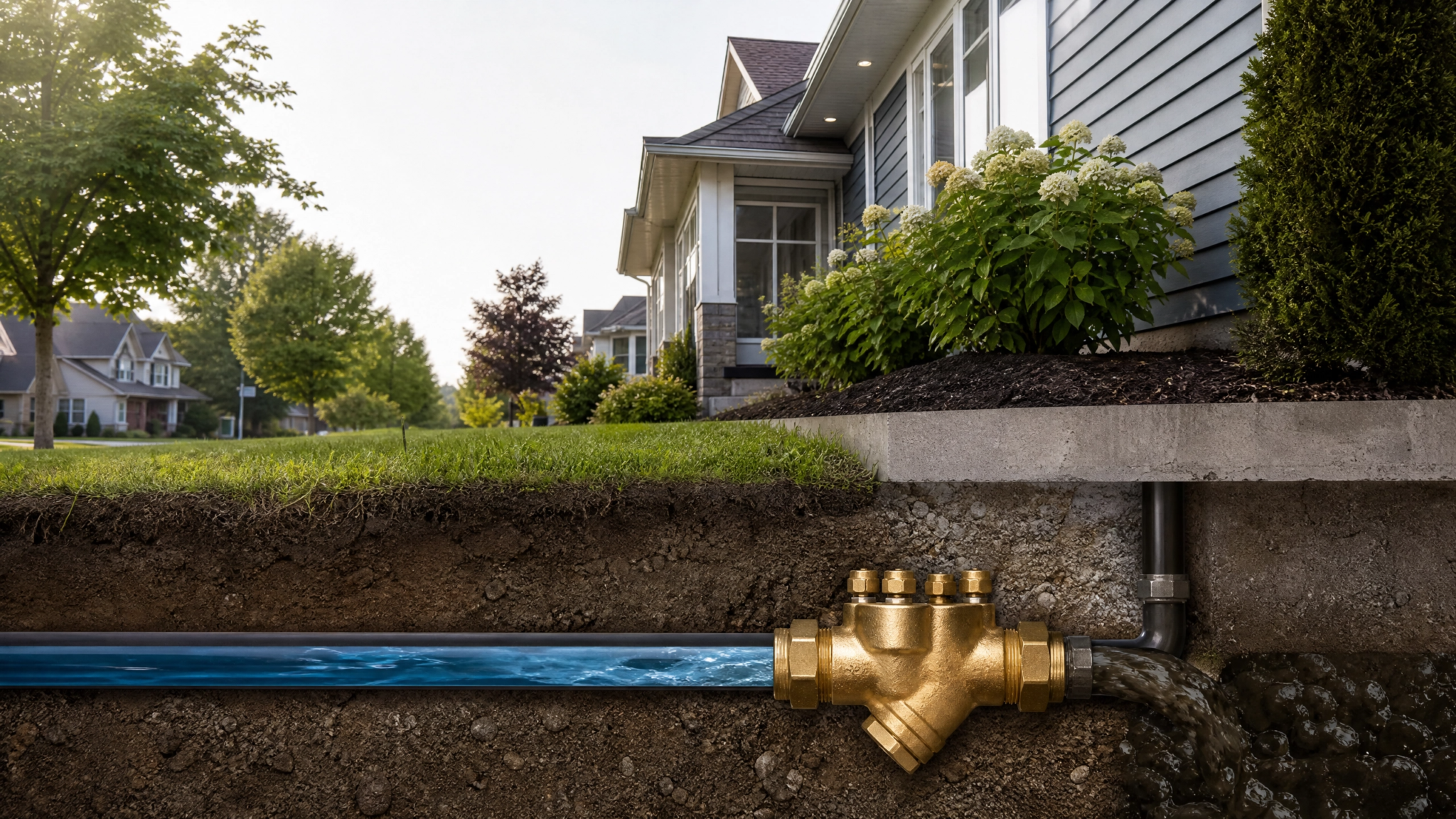
Most homeowners in Châteauguay assume the water flowing out of their taps is consistently safe because it comes from the municipal supply. And in most cases, they are right. But there is a specific plumbing condition that can temporarily reverse that assumption, and it is called backflow. It happens when pressure changes in the water distribution system allow water to flow backward through your connections, potentially introducing contamination into potable water lines. Backflow valve plumbing in Châteauguay is the professional solution that prevents this from happening in the first place.
This is not a fringe concern for industrial facilities alone. Backflow conditions can occur in residential and commercial properties under specific circumstances, and the consequences can range from cosmetic water discolouration to genuine contamination of the drinking water supply. Understanding how backflow valve plumbing works and when it is required gives you the information you need to protect your property and the people in it.
What Is Backflow and How Does It Happen?
Your plumbing system is designed to maintain a consistent flow direction: water moves from the municipal supply into your property and exits through your drain system. Backflow is what happens when that direction reverses.
There are two mechanisms that cause backflow. The first is back-siphonage, which occurs when a sudden drop in supply pressure creates a vacuum that pulls water backward through connections. This can happen during a main water line break, firefighting operations drawing heavy supply, or maintenance shutdowns. The second is back-pressure backflow, where pressure on the downstream side of a connection exceeds the supply pressure. This is more common in commercial and industrial settings where booster pumps or heating systems create internal pressure greater than the incoming supply.
In both cases, the risk is that water from a potentially contaminated source, a garden hose submerged in a chemical container, a swimming pool connection, a boiler system, or a commercial process, travels backward into the potable water supply.
How Backflow Prevention Valves Work
A backflow prevention assembly is a mechanical device installed on your supply line that allows water to flow in only one direction. The specific type required depends on the application and the degree of hazard associated with the connected water use. Common configurations include pressure vacuum breakers, reduced pressure zone assemblies, and double check valve assemblies, each providing a different level of protection calibrated to the risk involved.
In residential applications across Châteauguay, backflow prevention is typically required on irrigation system connections, hose bib connections that may be used with chemical attachments, and any cross-connection between potable water and non-potable water sources. Backflow valve plumbing in Châteauguay must be installed by a licensed plumber and, for certain device types, must be tested annually by a certified backflow tester as required by Québec and municipal regulations.
Why It Matters for Châteauguay Properties
Châteauguay properties connected to shared municipal water infrastructure have an interconnected responsibility when it comes to cross-connection control. A backflow event at one property does not stay contained to that property. It can potentially affect adjacent connections and, in severe cases, sections of the distribution system.
For residential homeowners, the most common backflow risk points are garden hose connections used with fertilizer or pesticide applicators, swimming pool fill connections, and irrigation systems. Each of these represents a potential cross-connection. Properly installed backflow valve plumbing eliminates those risks in a way that no amount of careful usage can.
What Installation and Maintenance Look Like
Installing backflow valve plumbing in Châteauguay involves selecting the appropriate device for your specific application, installing it in the correct location on the supply line, and, in applicable cases, registering it with the municipality and scheduling annual performance testing. A licensed plumber assesses your property’s cross-connection risks, specifies the right assembly, and installs it in compliance with the Plumbing Code of Québec.
Annual testing by a certified tester verifies that the mechanical components are functioning as intended. Backflow prevention assemblies can fail over time due to debris, corrosion, or spring fatigue inside the device. Testing catches these failures before they leave your supply line unprotected.
Protect What Comes Out of Your Taps
Backflow contamination is preventable. The right device, properly installed and maintained, eliminates the risk entirely. Trusted companies like Plombeo provide professional backflow valve plumbing in Châteauguay, including cross-connection assessment, device selection, compliant installation, and coordination with testing requirements. If your property has irrigation, pool connections, or any hose bib used with chemical attachments, a conversation with a licensed plumber about backflow protection is worth having sooner rather than later.