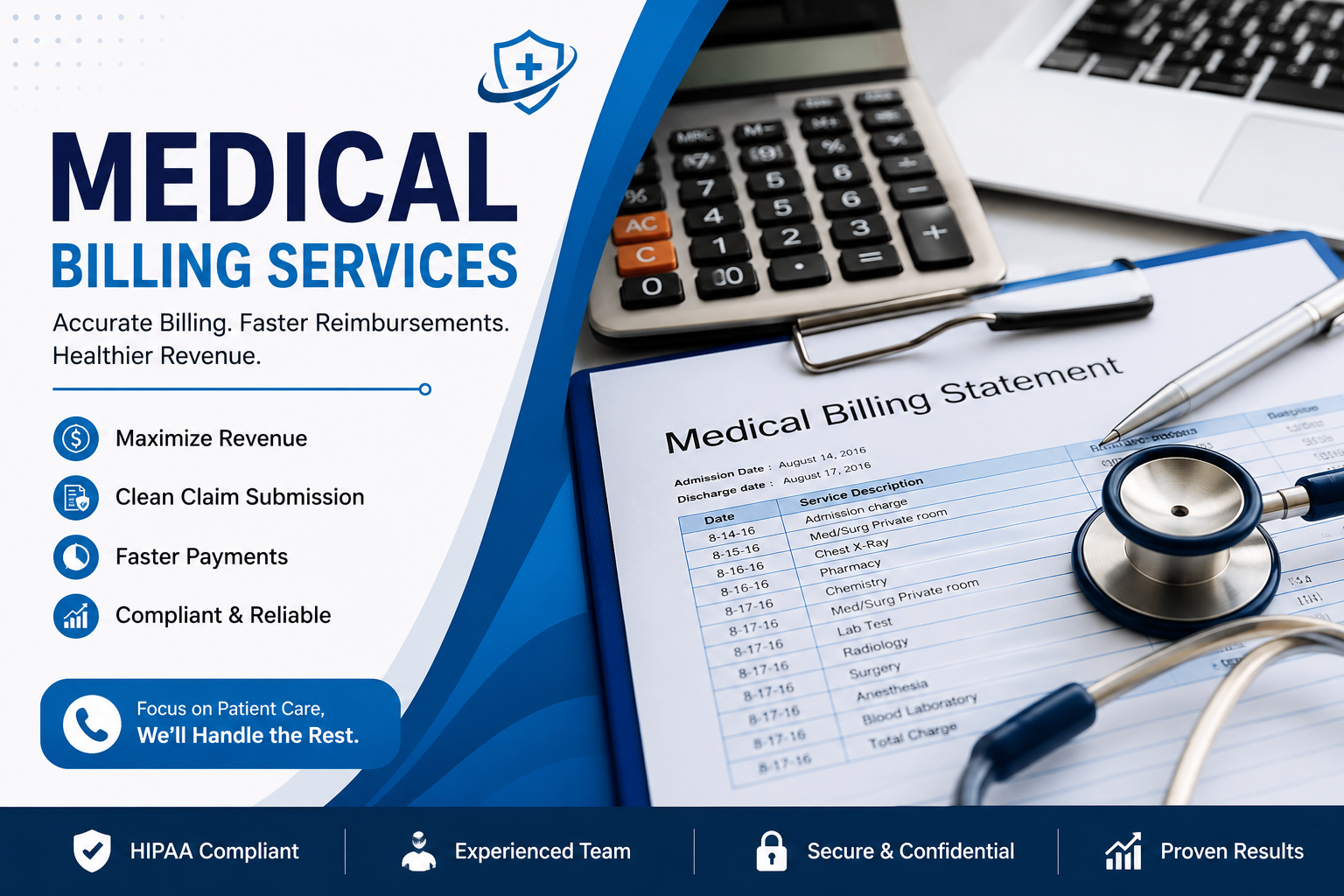
Revenue Cycle Management is the backbone of financial health for any hospital, clinic, or medical practice. In simple terms, it is the process of tracking patient revenue from the first appointment to the final payment. It covers scheduling, insurance verification, coding, billing, claims submission, and collections.
For healthcare providers, this process is not just an administrative task. It directly affects cash flow, patient satisfaction, and long-term sustainability. A well-managed revenue cycle reduces errors, speeds up payments, and keeps the entire practice running smoothly.
In this article, we will break down the top benefits of Revenue Cycle Management, common billing mistakes providers make, and practical tips to strengthen your financial process from intake to payment.
Why Revenue Cycle Management Matters for Healthcare Providers
Every healthcare provider deals with a mix of insurance companies, patient payments, and regulatory rules. Without a structured system in place, claims get delayed, denied, or lost somewhere in the process.
This is where a strong revenue cycle brings order to the chaos. It connects clinical work with financial outcomes, so providers get paid accurately and on time.
Here is why it matters:
- It reduces claim denials caused by coding or documentation errors
- It shortens the time between service delivery and payment
- It improves transparency for both staff and patients
- It supports better compliance with healthcare regulations
- It gives leadership clearer visibility into financial performance
When this system works well, doctors and administrators can focus more on patient care instead of chasing unpaid invoices.
Key Benefits of Revenue Cycle Management
A strong revenue cycle process offers measurable advantages across the entire organization. Below are the benefits providers notice most often, from the front desk to the finance department.
- Faster and More Accurate Payments Automated verification and coding reduce human error, which means claims get approved faster and payments arrive sooner.
- Fewer Claim Denials Insurance denials often happen due to missing information or incorrect codes. A structured process catches these issues before submission.
- Improved Cash Flow Consistent billing cycles and quicker reimbursements help practices maintain steady cash flow, even during high patient volume periods.
- Better Patient Experience Clear billing statements and upfront cost estimates reduce confusion, building trust between patients and providers.
- Stronger Regulatory Compliance Healthcare rules change frequently, and a well-managed billing process helps practices stay aligned with current coding and privacy standards.
- Reduced Administrative Burden Automation handles repetitive tasks like eligibility checks and claim tracking, freeing staff to focus on patient-facing work.
- Data-Driven Decision Making Reporting tools reveal trends, bottlenecks, and areas needing improvement across departments and providers.
- Lower Operational Costs Fewer denied claims and less manual rework directly reduce the cost of running the billing department.
- Scalability for Growing Practices As patient volume increases, a solid financial workflow scales without requiring a complete overhaul of existing systems.
- Long-Term Financial Stability Predictable revenue allows providers to plan investments in staff, equipment, and patient services with far more confidence.
Common Mistakes Providers Make in Medical Billing Optimization
Even experienced healthcare teams run into avoidable problems that slow down reimbursement and hurt overall efficiency. Recognizing these mistakes early can save significant time and money.
- Relying on outdated insurance eligibility information
- Delaying claim submissions past optimal filing windows
- Using inconsistent or outdated medical codes
- Ignoring denial trends instead of analyzing root causes
- Failing to train staff on updated billing regulations
- Skipping regular audits of accounts receivable
Avoiding these issues requires ongoing attention, not a one-time fix. Regular audits and consistent staff training go a long way in preventing costly, repeated errors.
Practical Tips to Strengthen Your Healthcare Revenue Cycle Management Process
Improving your revenue cycle does not require a complete system overhaul overnight. Small, consistent changes often produce the biggest results over time.
- Verify insurance eligibility before every appointment, not just at intake
- Standardize coding practices across all departments and providers
- Track key performance indicators like days in accounts receivable
- Communicate billing expectations clearly with patients upfront
- Review denied claims weekly instead of monthly
- Invest in staff training whenever regulations or payer rules change
These practical steps help providers build a billing process that is efficient, transparent, and easier to manage as the practice grows.
Choosing the right approach, whether through an in-house team or a trusted billing partner, plays a major role in how smoothly this process runs day to day. Providers who take the time to understand their own financial workflow tend to see fewer disruptions and more predictable outcomes down the road.
Revenue Cycle Management and the Future of Healthcare Billing
Healthcare billing is evolving quickly, with automation and analytics playing a bigger role every year. This field is becoming more data-driven, with predictive tools helping providers spot denial risks before claims are even submitted.
Compared to older, paper-based billing methods, today’s systems offer real-time visibility into claim status, patient balances, and payer performance. This shift matters because manual processes simply cannot keep pace with growing patient volumes and changing insurance requirements.
Providers who adapt early, and treat their financial workflow as a strategic priority rather than a back-office chore, gain a real advantage over competitors who fall behind.
Frequently Asked Questions
What is Revenue Cycle Management in healthcare?
It is the process of managing patient billing from scheduling through final payment, including coding, claims, and collections.
Why is this process important for small clinics?
It helps small clinics maintain steady cash flow, reduce claim denials, and avoid administrative overload with limited staff resources.
How does Revenue Cycle Management reduce claim denials?
It catches coding errors and missing documentation before submission, which lowers the chances of insurance rejections.
What is the difference between medical billing and Revenue Cycle Management?
Medical billing is one part of the process. The broader revenue cycle covers the entire journey, from patient intake to final payment collection.
Can this process improve patient satisfaction?
Yes. Clear billing communication and fewer errors create a smoother, more trustworthy experience for patients.