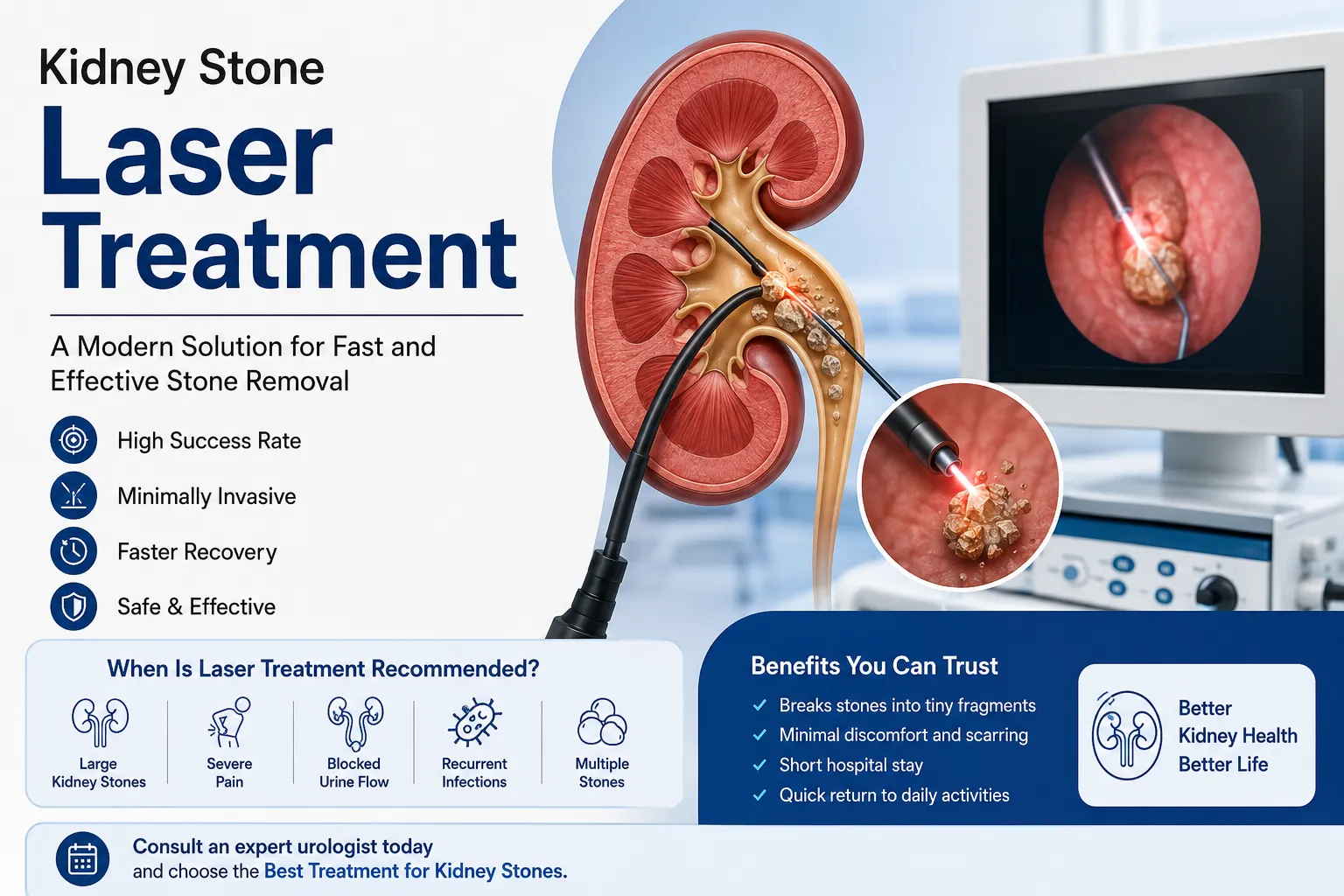
Kidney stones can cause severe pain, urinary problems, and repeated discomfort that affects daily life. While small stones may pass naturally, larger stones often require medical intervention. Thanks to advances in urology, kidney stone laser treatment has become one of the most effective and minimally invasive methods for removing stones safely and efficiently.
If you have been diagnosed with kidney stones and are exploring treatment options, understanding how laser treatment works, its benefits, recovery process, and cost considerations can help you make an informed decision.
What Is Kidney Stone Laser Treatment?
Kidney stone laser treatment is a minimally invasive procedure used to break kidney stones into tiny fragments using laser energy. The most commonly used technique is laser lithotripsy, where a thin scope is passed through the urinary tract to locate the stone.
Once the stone is identified, a high-powered laser is directed at it, breaking it into small pieces that can either be removed immediately or passed naturally through urine over time.
This procedure is widely recommended for patients with medium to large stones, stones causing significant symptoms, or stones that cannot pass on their own.
When Is Laser Treatment Recommended?
Doctors may suggest laser treatment in the following situations:
- Persistent kidney stone pain
- Large kidney stones
- Stones blocking urine flow
- Recurrent urinary tract infections
- Stones that fail to pass naturally
- Multiple stones in the kidney or ureter
Compared to traditional surgical methods, laser treatment offers a less invasive solution with shorter recovery times and fewer complications.
How Does the Procedure Work?
The process typically involves several steps:
Initial Evaluation
Your urologist will perform imaging tests such as:
- CT scan
- Ultrasound
- X-rays
- Urine analysis
- Blood tests
These assessments help determine the stone’s size, location, and composition.
During the Procedure
The procedure is usually performed under general or spinal anesthesia.
A thin instrument called a ureteroscope is inserted through the urinary tract without making any external incisions. The surgeon locates the stone and uses laser energy to break it into tiny particles.
Depending on the situation, some fragments may be removed immediately while smaller pieces pass naturally later.
Placement of a Stent
In some cases, a temporary ureteral stent may be inserted to help urine flow smoothly and reduce swelling during recovery.
Benefits of Kidney Stone Laser Treatment
Laser treatment has become increasingly popular because of its numerous advantages.
High Success Rate
Laser lithotripsy is highly effective for treating stones in various locations throughout the urinary tract.
Minimally Invasive Approach
Since there are no surgical incisions, patients experience less pain and reduced risk of complications.
Faster Recovery
Most patients return to normal activities within a few days, depending on the complexity of the procedure.
Suitable for Different Stone Types
Laser technology can effectively break various stone compositions, including calcium oxalate, uric acid, and cystine stones.
Reduced Hospital Stay
Many patients are discharged on the same day or after a short observation period.
Recovery After Laser Stone Removal
Recovery is generally smooth, but patients should follow their doctor’s recommendations carefully.
Common temporary symptoms include:
- Mild burning during urination
- Slight blood in urine
- Increased urinary frequency
- Mild discomfort in the lower abdomen
Most symptoms improve within a few days.
To support healing:
- Drink plenty of water
- Avoid strenuous physical activity initially
- Take prescribed medications as directed
- Attend follow-up appointments
Your doctor may also provide dietary recommendations to prevent future stone formation.
How to Prevent Kidney Stones from Returning
Successful treatment does not guarantee that stones will never recur. Prevention plays a crucial role in long-term kidney health.
Stay Hydrated
Adequate water intake helps dilute minerals that can form stones.
Maintain a Balanced Diet
Reducing excessive salt and processed foods can lower stone risk.
Monitor Oxalate Intake
Certain foods such as spinach, chocolate, and nuts may contribute to stone formation in susceptible individuals.
Follow Medical Advice
Patients with recurrent stones may need specialized dietary plans or medications.
Understanding Kidney Stone Laser Treatment Cost
One of the most common questions patients ask is about kidney stone laser treatment cost. The total expense varies depending on several factors, including:
- Stone size and complexity
- Hospital facilities
- Surgeon expertise
- Diagnostic tests required
- Type of anesthesia used
- Length of hospital stay
- Post-treatment medications and follow-ups
Because every patient’s condition is unique, obtaining a personalized consultation is the best way to receive an accurate estimate.
Kidney Stone Treatment Cost in Dubai
Many patients seek advanced urology care in Dubai due to modern medical facilities and experienced specialists. The kidney stone treatment cost in Dubai can vary depending on the chosen hospital, technology used, and complexity of the procedure.
Premium healthcare centers often provide comprehensive treatment packages that include:
- Specialist consultation
- Diagnostic imaging
- Laser stone removal procedure
- Hospital charges
- Follow-up care
Patients should compare treatment plans carefully and prioritize quality of care rather than cost alone.
Is Laser Treatment the Best Treatment for Kidney Stones?
The best treatment for kidney stones depends on factors such as stone size, location, symptoms, and overall health condition.
For many patients, laser treatment is considered one of the most effective options because it offers:
- Excellent stone clearance rates
- Minimal invasiveness
- Faster recovery
- Lower complication risks
- Precise stone fragmentation
However, smaller stones may pass naturally, while extremely large stones may require alternative procedures such as percutaneous nephrolithotomy (PCNL). A qualified urologist can recommend the most appropriate approach based on your individual case.
Final Thoughts
Kidney stone laser treatment has transformed the way kidney stones are managed, providing patients with a safe, effective, and minimally invasive solution. Whether you are experiencing recurring stones or dealing with a larger obstruction, modern laser technology can help restore comfort and improve quality of life.
Understanding the procedure, recovery expectations, and factors influencing kidney stone laser treatment cost allows patients to make informed healthcare decisions. Consulting an experienced urology specialist remains the most reliable way to determine the best treatment for kidney stones and achieve long-term kidney health.