
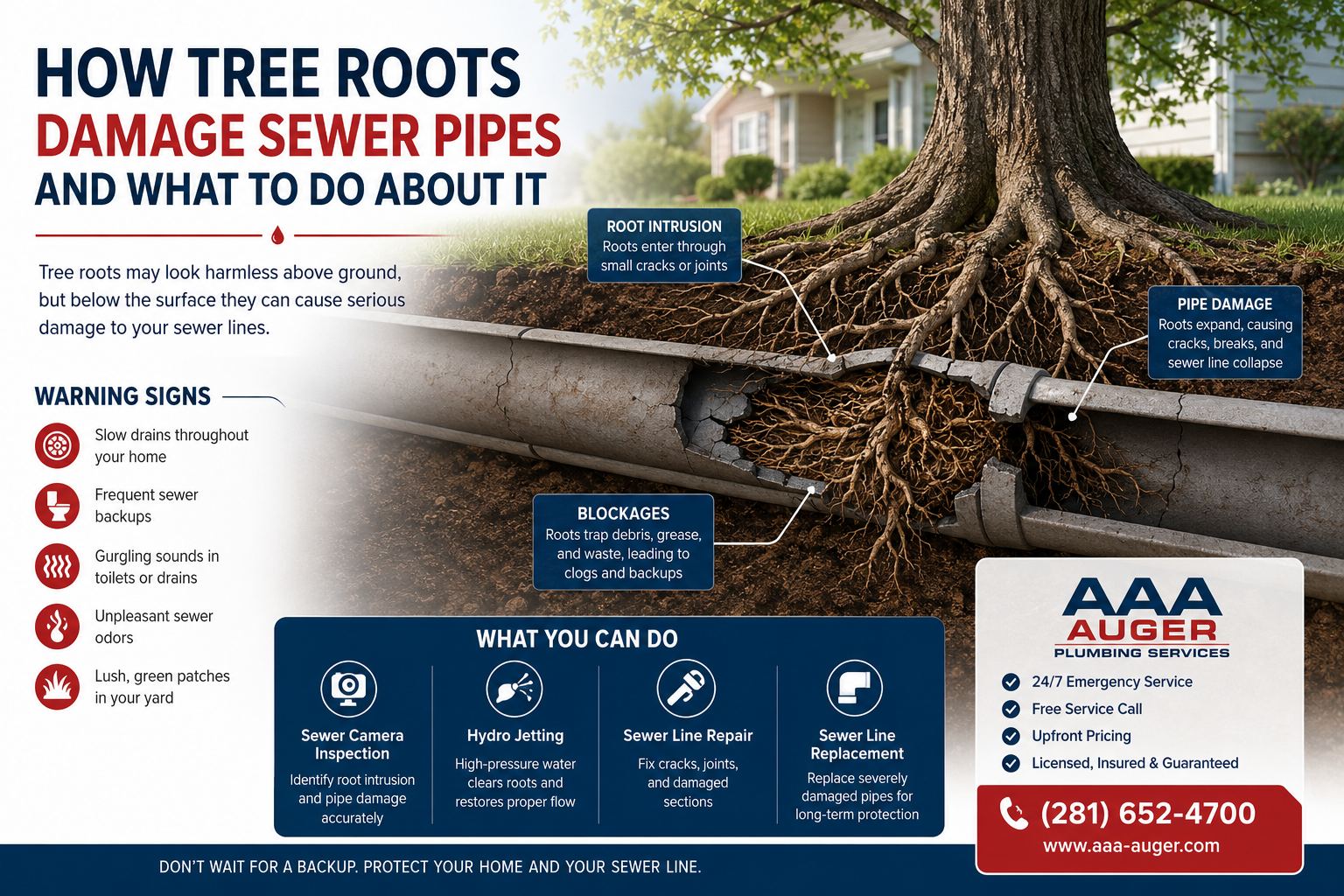
Tree roots can add beauty, shade, and value to a property. However, what many homeowners do not realize is that the same roots growing beneath the surface can become a serious threat to their plumbing system. Tree root intrusion is one of the leading causes of sewer line damage, recurring drain clogs, and costly plumbing repairs.
When roots find their way into underground sewer pipes, they can restrict water flow, create blockages, and even cause pipes to crack or collapse. Professional services such as sewer line repair and drain cleaning can help identify and resolve these issues before they become major plumbing emergencies.
For homeowners dealing with recurring sewer problems, professional sewer repair services can provide long-term solutions
Why Tree Roots Are Attracted to Sewer Pipes
Tree roots naturally seek moisture and nutrients to support growth. Even the smallest crack, loose pipe joint, or tiny opening in a sewer line can release water vapor into the surrounding soil.
Roots detect this moisture and begin growing toward the source. Once they reach the pipe, they can enter through small openings and continue expanding inside the sewer line. Over time, the roots thicken and spread, creating significant obstructions.
Older sewer systems made from clay, cast iron, or concrete pipes are particularly vulnerable because these materials often develop cracks and weakened joints as they age.
Common Ways Tree Roots Damage Sewer Pipes
Root Intrusion Through Small Cracks
A tiny crack may seem harmless at first, but it provides enough space for fine tree roots to enter. Once inside, roots continue growing and trapping debris, grease, and waste.
This buildup gradually restricts water flow and increases the likelihood of sewer backups.
Pipe Joint Separation
Many sewer lines consist of multiple pipe sections connected by joints. As tree roots grow around these joints, they can force them apart.
When joints separate, wastewater can leak into the soil while allowing even more roots to invade the pipe.
Pipe Cracking and Breakage
Large roots can exert tremendous pressure on underground plumbing. As roots expand, they may crack, deform, or completely break sewer pipes.
In severe cases, sections of the sewer line can collapse, requiring extensive excavation and replacement.
Persistent Drain Blockages
Roots inside a sewer pipe act like a net, catching toilet paper, grease, food particles, and other debris. This often results in slow drains and recurring clogs throughout the home.
Warning Signs of Tree Root Damage
Recognizing the early signs of root intrusion can help prevent major sewer line failures.
Slow Drains Throughout the Home
If multiple sinks, showers, and toilets drain slowly at the same time, the problem may be located in the main sewer line rather than a single fixture.
Frequent Sewer Backups
Recurring backups are often a sign that roots are obstructing wastewater flow.
Gurgling Sounds
Air trapped by a partial blockage can create bubbling or gurgling noises in toilets and drains.
Unpleasant Odors
Damaged sewer pipes may allow sewer gases to escape, creating foul smells inside or outside the home.
Extra Green Patches in the Yard
A leaking sewer pipe can provide moisture and nutrients to surrounding grass, resulting in unusually lush or fast-growing patches of vegetation.
How Professionals Identify Root Intrusion
Modern plumbing technology makes it easier to locate and diagnose sewer line problems without unnecessary digging.
Sewer Camera Inspection
A sewer camera inspection is one of the most effective diagnostic tools available. A specialized waterproof camera is inserted into the sewer line to identify:
- Root intrusion
- Pipe cracks
- Joint separation
- Blockages
- Pipe deterioration
This process allows plumbers to determine the exact location and severity of the damage.
Professional Drain Testing
Experienced plumbers may also perform flow and pressure evaluations to determine how significantly the roots are affecting sewer performance.
Solutions for Tree Root Damage
Hydro Jetting
Hydro jetting uses high-pressure water to cut through roots and clear accumulated debris from the inside of the pipe.
This method is highly effective for removing smaller root intrusions while restoring normal water flow.
Mechanical Root Removal
Specialized cutting tools can physically remove roots from inside the sewer line. This approach is often used when roots have created substantial blockages.
Sewer Line Repair
If roots have caused cracks, separations, or structural damage, targeted sewer line repairs may be necessary.
Repair methods vary depending on the extent of the damage and the condition of the existing pipe.
Sewer Line Replacement
In cases where pipes are severely deteriorated or collapsed, replacing the affected section may be the most cost-effective long-term solution.
Modern replacement materials are more resistant to root intrusion and provide improved durability.
How to Prevent Tree Root Problems
Plant Trees Strategically
Avoid planting large trees directly above or near underground sewer lines. Research the mature root spread of any tree before planting.
Schedule Regular Sewer Inspections
Periodic sewer camera inspections can identify root growth before it causes significant damage.
Address Small Plumbing Issues Quickly
Even minor leaks or cracks can attract roots. Prompt repairs help reduce the risk of intrusion.
Consider Preventive Maintenance
Routine drain cleaning and sewer maintenance can help remove debris and identify developing issues before they escalate.
The Cost of Ignoring Root Intrusion
Many homeowners ignore early warning signs because drains still function, even if slowly. Unfortunately, tree roots rarely stop growing on their own.
Delaying repairs can lead to:
- Major sewer backups
- Water damage
- Landscape disruption
- Emergency plumbing costs
- Full sewer line replacement
Early intervention is typically far less expensive than waiting for a complete sewer failure.
Final Thoughts
Tree roots are one of the most common causes of sewer line damage. While roots naturally seek moisture, they can create serious plumbing problems once they enter underground pipes. Slow drains, recurring clogs, sewer odors, and backups are all signs that root intrusion may be affecting your system.
Professional sewer camera inspections, hydro jetting, drain cleaning, and sewer repair services can help restore proper function and prevent costly damage. By addressing root problems early and scheduling routine maintenance, homeowners can protect their sewer lines and avoid unexpected plumbing emergencies.