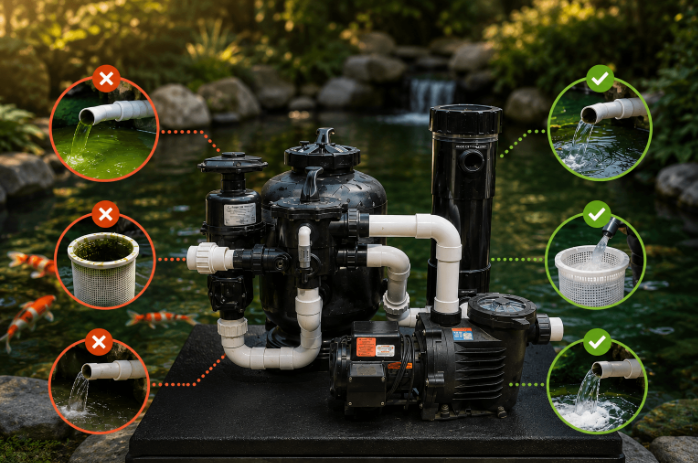
A clear pond does not happen by chance. It starts with a clean and well-maintained filter. Even the best pond filter cannot keep water healthy if it is ignored for too long. Dirt, fish waste, leftover food, and leaves slowly build up inside the filter. Over time, this can reduce water flow and make the pond look cloudy. Poor filter care can also stress koi and increase the risk of health problems.
Regular maintenance helps a filter work the way it should. It keeps water clean, supports helpful bacteria, and creates a healthy home for fish and pond plants. Many pond owners choose Aquabead because its advanced filtration systems are built to deliver reliable performance while making pond care easier. With the right maintenance routine, almost any quality filter can continue working well for many years.
A Pond Filter Does More Than Clean Water
Many people think a pond filter only removes dirt. In reality, it does much more than that. A healthy filter works day and night to keep the pond balanced.
Most pond filters have two important jobs. The first is mechanical filtration, which catches leaves, fish waste, and other debris before they break down in the water. The second is biological filtration, where helpful bacteria live. These tiny bacteria change harmful waste into safer substances, helping protect koi from poor water quality.
When both parts work together, the pond stays cleaner, smells fresher, and provides a healthier place for fish to grow.
Why Regular Maintenance Matters
At first, it might not seem like a big deal to neglect filter maintenance for weeks or months. But minor problems can easily grow into larger ones.
Water cannot be moved effectively by a dirty filter. Instead of being eliminated, waste starts to accumulate inside the system. Oxygen levels may decrease as water flow slows. This reduces the filter’s capacity to naturally clean the pond by making it more difficult for beneficial bacteria to survive.
Regular maintenance has multiple advantages:
- keeps water fresh and clear.
- keeps koi active and healthy
- decreases the growth of algae
- keeps helpful bacteria safe.
- enhances the flow of water
- increases the filter’s and pump’s lifespan
- reduces the likelihood of costly repairs
A little care every few weeks often prevents major problems later.
Signs Your Koi Pond Filter Needs Attention
A pond filter usually gives warning signs before it stops working properly. Spotting these signs early can save time and money.
The first clue is frequently cloudy or green water. This typically indicates that the filter is not eliminating waste as effectively as it ought to. Another typical indication is slow water returning to the pond. It frequently indicates blocked pipes or clogged filter media.
Other warning signs include:
- Bad smells are coming from the filter
- Fish are staying near the surface more often
- Extra algae growing around the pond
- Debris is collecting on the pond floor
- Water is overflowing from the filter instead of flowing through it
Checking the filter every week makes it easier to catch these problems before they become serious.
Start with a Simple Weekly Inspection
Good filter maintenance does not always mean taking the whole system apart. Most of the time, a quick inspection is enough to spot small problems early.
Pond owners should inspect the pipes, pump, and filter once a week. Verify that the water is flowing normally and pay attention to any strange noises coming from the pump. Before they clog the system, remove any leaves or large debris from the area surrounding the filter.
It also helps to check the pond water at the same time. Clear water, active koi, and steady water movement usually show that the filtration system is working well.
Spending just a few minutes each week on these simple checks can keep a koi pond filter performing well for many years.
Clean the Filter the Right Way
Cleaning a pond filter is important, but cleaning it the wrong way can do more harm than good. Many pond owners think a filter should look spotless after every cleaning. In fact, removing all the dirt and bacteria can upset the pond’s natural balance.
Cleaning only what is required is the best strategy. Don’t use soap or household cleaners; instead, gently wash the dirty parts. Chemicals that can damage koi and the beneficial bacteria inside the filter are left behind by these products.
Whenever possible, rinse filter media with pond water instead of tap water. Tap water often contains chlorine, which can kill the good bacteria that keep the water healthy.
Protect the Helpful Bacteria
A healthy pond depends on millions of tiny bacteria that live inside the filter. These bacteria break down fish waste and help keep harmful toxins under control.
If all the filter media is cleaned or replaced at the same time, much of this helpful bacteria can be lost. As a result, water quality may drop, and koi may become stressed.
A better method is to clean one section of the filter at a time. This allows enough bacteria to remain active while the cleaned section builds up new colonies. It is a simple habit that helps the entire filtration system recover much faster.
Check the Filter Media
Filter media does most of the hard work inside the filtration system. Over time, it can become clogged, worn out, or damaged.
During each cleaning, inspect the media carefully. Look for signs such as:
- Cracked or broken pieces
- Heavy dirt that will not wash away
- Flattened filter pads
- Media that no longer allows water to pass through easily
Not every type of media needs to be replaced often. Many biological media products last for years if they are cleaned correctly. Only replace damaged media instead of changing everything at once.
Don’t Forget the Pump and Pipes
A filter cannot perform well if the pump or plumbing has problems.
Leaves, string algae, and small stones can block the pump intake or pipes. Even a small blockage can reduce water flow and make the filter less effective.
Every few weeks, check:
- Pump intake
- Hoses and pipes
- Valves and fittings
- Water outlets
Clear any obstructions before they worsen. The filter can operate to its maximum potential when the water flow is constant.
Test the Water After Maintenance
Cleaning the filter is only part of the job. Water quality should also be checked to make sure the pond stays healthy.
Simple water test kits can measure:
- Ammonia
- Nitrite
- Nitrate
- pH
If any reading is outside the normal range, the problem can be fixed before it affects the koi.
Watching the fish also helps. Healthy koi swim actively, eat well, and have bright colors. If they seem slow or stay near the surface, the water may need attention.
Seasonal Care Keeps Filters Working Longer
Each season brings different challenges for a pond filter.
Spring
After winter, remove any dirt that has collected inside the filter. Check the pump, pipes, and filter media before feeding koi more often.
Summer
Fish consume more food and generate more waste when the weather is warm. Maintain good water flow and clean the mechanical filter more frequently.
Autumn
Falling leaves can clog the filter quickly. A pond net can help reduce the amount of debris entering the water.
Winter
In colder climates, koi become less active, which slows down feeding. Although filter maintenance is usually less demanding, water flow should still be regularly checked to prevent blockages.
Seasonal care helps avoid sudden problems and keeps the filtration system ready throughout the year.
Common Filter Maintenance Mistakes
Even seasoned pond owners can make errors that lower filter efficiency.
Some of the most common include the following:
- Cleaning the entire filter too often
- Washing filter media with chlorinated tap water
- Ignoring slow water flow
- Waiting until the water becomes cloudy before cleaning
- Replacing all filter media at one time
- Forgetting to inspect the pump and pipes
Avoiding these simple mistakes can greatly improve the life of both the filter and the pond.
Healthy Filters, Healthy Koi, Happy Pond
A well-maintained filter greatly benefits any koi pond. Consistent cleaning, thorough inspections, and accurate water testing help avoid typical pond issues early on. Aquabead‘s high-quality filtration systems are crafted to simplify pond upkeep while promoting clear water and a balanced ecosystem. With regular maintenance, these systems can deliver dependable performance for years, ensuring koi have a clean, healthy environment to thrive in.
Frequently Asked Questions
How often should a koi pond filter be cleaned?
Most mechanical filters should be checked every one to two weeks. Biological filters need less frequent cleaning to protect helpful bacteria.
Can a koi pond filter be cleaned too often?
Yes. Cleaning too often or too thoroughly can remove beneficial bacteria and reduce the filter’s natural cleaning ability.
Why is pond water still cloudy after cleaning the filter?
Cloudy water may be caused by poor water balance, too many fish, overfeeding, or a filter that needs time to rebuild beneficial bacteria.
When should pond filter media be replaced?
Replace filter media only if it becomes damaged or no longer works properly. Many types of biological media last for several years.
Is tap water safe for cleaning filter media?
No. Chlorinated tap water can kill beneficial bacteria. Pond water is usually the safer choice for rinsing filter media.
Does a koi pond filter need maintenance during winter?
Yes. Although cleaning may be less frequent, the filter, pump, and water flow should still be checked regularly to keep the system working properly.
What is the easiest way to extend the life of a koi pond filter?
Regular inspections, gentle cleaning, protecting beneficial bacteria, and fixing small problems early will help a filter perform well for many years.