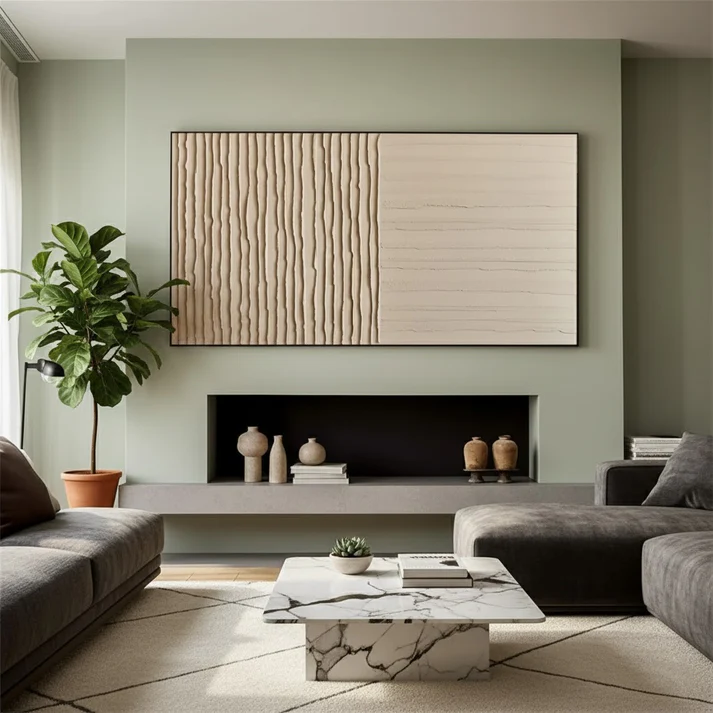
Wabi-Sabi wall art has a distinctive way of changing the atmosphere of a room. Instead of relying on bright colors, perfect symmetry, or highly detailed imagery, it often uses natural textures, organic shapes, muted tones, and subtle imperfections.
That makes Wabi-Sabi art particularly suitable for modern homes where the goal is to create a calm, warm, and intentional environment.
However, choosing Wabi-Sabi artwork is not simply about finding a piece you like. The size, texture, color palette, orientation, and placement should work with the room around it.
Whether you are decorating a living room, bedroom, hallway, dining area, or home office, the right artwork can help connect the entire space.
What Is Wabi-Sabi Wall Art?
Wabi-Sabi is a Japanese aesthetic philosophy associated with appreciating imperfection, impermanence, simplicity, and natural beauty.
In wall art, this philosophy can appear through:
- Organic forms
- Neutral color palettes
- Handcrafted textures
- Uneven surfaces
- Minimal compositions
- Earth-inspired tones
- Visible material character
- Abstract shapes
ArtiQuo’s Wabi-Sabi collection combines textured minimalist designs, organic forms, neutral tones, and handmade characteristics to create artwork intended for contemporary interiors.
The result is artwork that can add visual interest without making the room feel overly decorated.
Wabi-Sabi Wall Art for the Living Room
The living room is often the best place for a larger Wabi-Sabi artwork because it usually contains the largest uninterrupted wall.
A large piece above a sofa can become the room’s primary focal point while maintaining the calm aesthetic associated with Wabi-Sabi interiors.
Choose Large Art for Large Walls
If you have a wide sofa and a large empty wall, a small artwork may look disconnected from the furniture.
Instead, consider:
- Large textured canvas
- Oversized abstract artwork
- Two-piece Wabi-Sabi sets
- Three-piece compositions
- Wide neutral artwork
ArtiQuo’s collection includes individual pieces as well as Wabi-Sabi sets of two and three, giving homeowners different ways to fill larger walls.
Match the Artwork With Existing Materials
Wabi-Sabi art works particularly well with natural materials such as:
- Wood
- Linen
- Stone
- Concrete
- Ceramic
- Rattan
- Natural fibres
You do not need every element in the room to match.
Instead, look for visual relationships between the artwork’s texture and the materials already present.
For example, a textured neutral canvas can complement a wooden coffee table without using the same color.
Wabi-Sabi Wall Art for the Bedroom
The bedroom should generally feel restful rather than visually busy.
This makes subtle Wabi-Sabi artwork a natural choice.
Look for compositions with:
- Soft beige
- Warm white
- Cream
- Taupe
- Sand
- Soft grey
- Muted brown
A large piece above the bed can provide a focal point without introducing strong visual contrast.
Keep the Composition Simple
The bedroom is not necessarily the place for highly dramatic artwork.
A restrained abstract piece with visible texture can create interest when viewed up close while remaining calm from across the room.
The goal is not to make the artwork disappear.
The goal is to make it feel naturally connected to the atmosphere of the bedroom.
Wabi-Sabi Art for the Dining Room
The dining room provides an opportunity to introduce slightly stronger texture.
A textured abstract piece can work particularly well behind a dining table, especially when the room contains natural wood, stone, or neutral upholstery.
Consider artwork that complements the shape of the dining table.
A long horizontal table can work with a wide artwork, while a round table may pair well with a more centered composition.
You can also use a set of two or three artworks to create a wider visual arrangement.
Wabi-Sabi Artwork for the Home Office
A home office does not need to feel sterile.
Wabi-Sabi art can introduce warmth and personality without creating excessive visual distraction.
For a workspace, consider:
- Minimal abstract artwork
- Neutral textured pieces
- Vertical compositions
- Small multi-panel arrangements
- Natural earthy palettes
If your desk faces the artwork, avoid choosing something so visually complex that it becomes distracting during work.
Instead, choose a piece with texture and depth that can be appreciated during breaks without dominating the room.
Wabi-Sabi Wall Art for Hallways
Hallways are frequently overlooked when decorating a home.
Because they are often narrow, vertical artwork can work especially well.
A tall Wabi-Sabi piece can draw attention upward and make an otherwise empty wall feel intentional.
For narrow spaces, consider:
- Vertical canvas
- Slim artwork
- Single statement pieces
- Small pairs
- Minimal compositions
ArtiQuo’s collection includes tall-format pieces that can work with the vertical proportions often found in hallways and narrower interiors.
Choosing the Right Wabi-Sabi Color Palette
Color is one of the easiest ways to connect artwork with the rest of a room.
Wabi-Sabi interiors commonly work with natural and subdued colors.
Popular choices include:
Beige
Beige creates warmth without becoming visually dominant.
Cream and White
Light neutrals can help create a clean, airy appearance.
Brown
Brown connects naturally with wood, leather, and other organic materials.
Grey
Grey can create a more contemporary and understated appearance.
Charcoal
Darker neutral elements can add contrast without introducing bright color.
The best choice depends on the room’s existing palette.
You do not need the artwork to match the walls exactly.
Instead, choose colors that complement the furniture, flooring, textiles, and lighting.
Texture Is More Important Than You Think
One of the defining characteristics of Wabi-Sabi wall art is texture.
A flat printed artwork can reproduce an image, but textured artwork adds physical depth to the wall.
Raised surfaces can interact with natural light and create changing shadows throughout the day.
ArtiQuo’s collection emphasizes textured abstract paintings and handmade characteristics, allowing the physical surface of the artwork to become part of the room’s visual experience.
This is particularly effective in minimalist interiors where there are fewer decorative objects competing for attention.
How Large Should Your Artwork Be?
Scale is one of the most common decorating mistakes.
A beautiful artwork can still look wrong if it is too small or too large for the wall.
Before purchasing, measure:
- Wall width
- Wall height
- Furniture width
- Available space above furniture
- Distance from surrounding objects
For artwork above a sofa or console, the artwork should generally feel visually connected to the furniture below it rather than appearing like an isolated object.
For very large walls, consider an oversized piece or a multi-panel arrangement.
ArtiQuo offers multiple artwork sizes and sets within its Wabi-Sabi collection, allowing buyers to consider different proportions for different spaces.
Should You Choose One Piece or a Set?
Both options can work.
Single Artwork
A single large piece is ideal when you want one strong focal point.
Set of Two
Two pieces can create balance while maintaining a minimalist appearance.
Set of Three
A triptych or three-piece arrangement can fill a wider wall while creating repetition and visual rhythm.
The choice depends on the wall size and the surrounding furniture.
Wabi-Sabi Art and Natural Lighting
Lighting can dramatically change textured artwork.
Natural daylight can reveal raised surfaces, shadows, and subtle changes in color.
A piece that looks relatively simple during the afternoon may appear more dimensional when illuminated from the side in the evening.
If possible, place textured artwork where natural or directional lighting can interact with its surface.
Avoid placing artwork where harsh glare completely obscures the texture.
Creating a Calm Interior With Wabi-Sabi Art
Wabi-Sabi does not require an entire home renovation.
One carefully selected artwork can introduce the aesthetic into an otherwise contemporary room.
Start with the wall you want to transform.
Then consider:
- The room’s existing colors
- Furniture style
- Available wall space
- Natural lighting
- Artwork orientation
- Desired focal point
- Amount of texture already present
The artwork should feel like part of the room rather than an object added at the last moment.
Final Thoughts
Choosing Wabi-Sabi wall art is ultimately about finding the right balance between simplicity, texture, scale, and natural beauty.
A large textured piece can anchor a living room, a subtle neutral artwork can create a peaceful bedroom atmosphere, and a vertical composition can transform an overlooked hallway.
The most successful Wabi-Sabi interiors do not try to make everything perfect.
They allow materials, textures, shapes, and small imperfections to create character.
For homeowners looking to introduce a quieter and more natural visual language into their interiors, Wabi-Sabi wall art offers a timeless way to make a room feel intentional without making it feel overdesigned.