
How Does Telehealth Care Work? A Complete Guide for US Patients
A few years ago, seeing a doctor meant driving somewhere and sitting in a waiting room. Today, it often means opening an app between meetings. Telehealth has become a normal part of American healthcare. Yet most articles only explain the surface level. They call it a video call and stop there. They skip how a visit actually unfolds. They skip what your provider can legally do across state lines. They skip how prescription rules actually work in the United States right now. This guide covers all of it.
What Telehealth Actually Means?
Telehealth delivers healthcare through video, phone, or secure messaging instead of an in-person appointment. It includes a live video visit with your primary care provider. It includes a phone based follow up after a procedure. It includes remote monitoring for chronic conditions. It includes a message-based check-in with a specialist. Most visits today happen over live video. Providers use a secure, encrypted platform built specifically for healthcare, not a regular consumer app.
How a Telehealth Visit Actually Happens?
Understanding the flow of a visit makes the whole process feel familiar fast.
You start by booking an appointment through a patient portal or app. You usually choose from a list of open time slots; the same way you schedule anything else. Before the visit, you fill out a short health history form or symptom questionnaire online. This lets the actual appointment focus on your concern instead of paperwork.
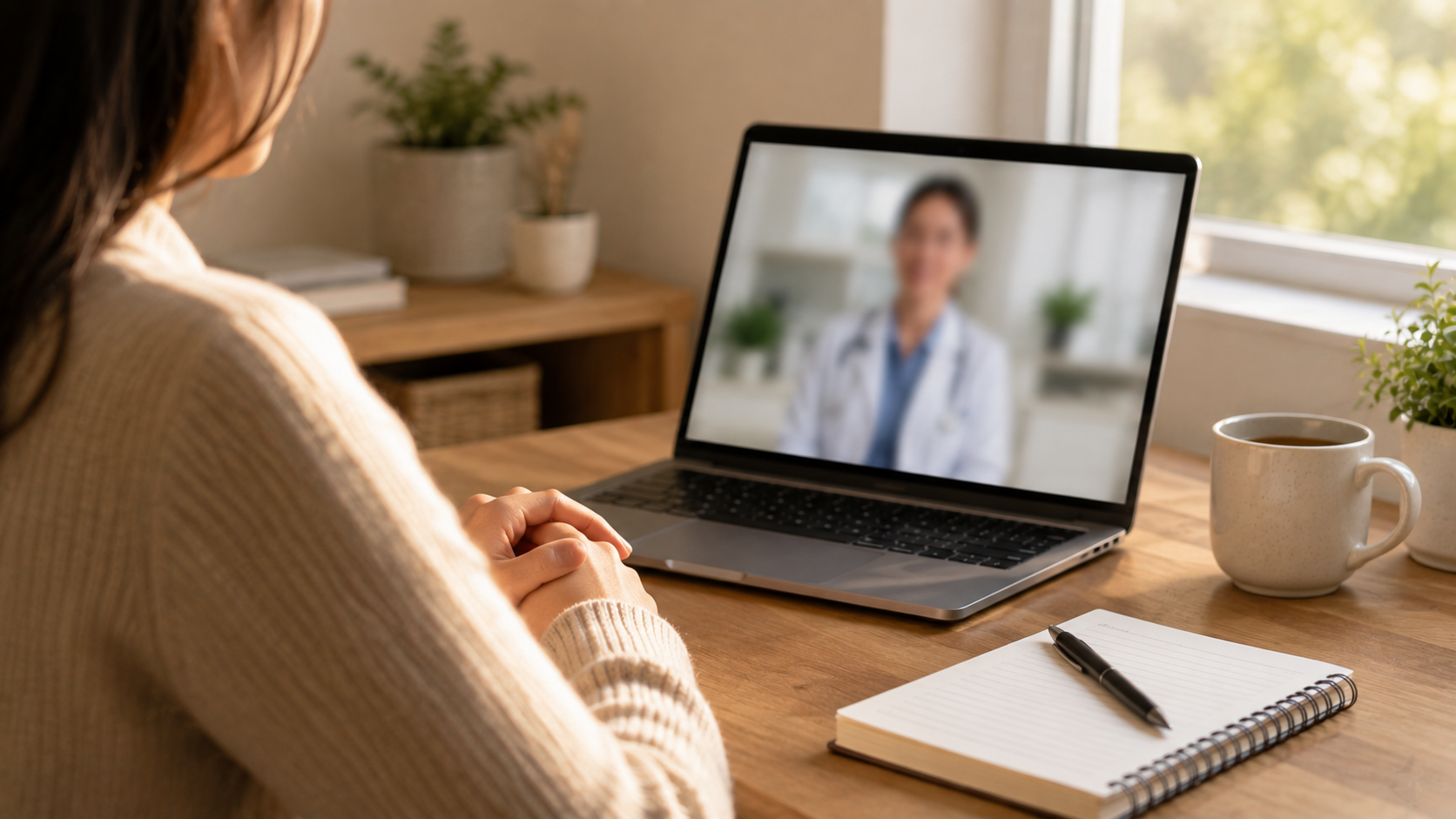
At your scheduled time, you join a secure video link. Your provider reviews your history and asks about your symptoms. In many cases, they can visually assess skin condition, a range of motion issues, or your general appearance. This works much the same way an in-person exam would.
Based on what they see and hear, your provider can act. They can diagnose common conditions. They can adjust an existing medication. They can order lab work at a nearby facility. Or they can tell you that your situation needs an in-person visit instead.
If a prescription makes sense, your provider sends it electronically to your pharmacy before the call ends. Many ongoing needs, like medication management, lab result reviews, and routine follow ups, can continue almost entirely through telehealth from that point forward.
What Telehealth Handles Well, and What It Doesn’t
Telehealth works well for medication management, chronic disease follow-ups, mental health counseling, dermatology consultations, minor illness visits, and lab result reviews. It doesn’t work for anything, requiring a hands-on exam, imaging, or a procedure. A suspected broken bone still needs an in person visit. A wound needing stitches still needs an in person visit. An exam requiring physical palpation still needs an in-person visit. A trustworthy telehealth provider will tell you directly when your situation belongs in an exam room instead of trying to manage everything remotely.
The US Prescribing Rules Most Patients Have Never Heard Of
Here is a detail almost no consumer article covers, and it matters if you take any regular medication. A federal law called the Ryan Haight Act originally required providers to conduct an in person medical evaluation before prescribing a controlled substance through telemedicine. That includes common medications for anxiety, ADHD, and pain management. During the COVID public health emergency, the DEA relaxed that requirement. Providers could then prescribe controlled substances through telehealth without a prior in person visit.
The DEA has extended that flexibility four separate times since then. Under the most recent extension, DEA registered providers can keep prescribing Schedule II through V controlled substances through telehealth without an initial in person exam through December 31, 2026. People often call this avoiding the telemedicine cliff. If flexibility expired suddenly, it would cut off access for a lot of patients, especially in rural areas and for people with mobility challenges. The DEA is still finalizing a permanent rule, so this policy could shift again after 2026. That is worth knowing if a specific medication is central to your care plan.
Why Your Provider Might Not Treat You in Every State
This detail surprises a lot of patients. The law treats telehealth as happening wherever you, the patient, are physically sitting, not where your provider is based. That means your provider generally needs a license in whatever state you are sitting in during the visit. If you travel and your regular telehealth provider lacks a license in that state, they may not legally be able to see you until you get home.
Most states have joined the Interstate Medical Licensure Compact to ease this burden. These compact speeds up the process for a physician to get licensed across multiple member states. As of 2026, 44 states plus Washington DC and Guam participate. The compact doesn’t eliminate the state-by-state licensing requirement, but it speeds up how fast a provider can obtain a license where their patients actually live. If you travel often or split time between states, ask your provider directly which state they hold a license in.
Is Telehealth Covered by Insurance?
Coverage has expanded a great deal over the past few years. Medicare has extended many of its pandemic era telehealth flexibility. This includes allowing visits from home rather than only from a specific facility. Recent extensions run through the end of 2027 under a 2026 federal law. That said, telehealth policy has shifted more than once recently. A government funding dispute briefly interrupted coverage in early 2026. So it is worth confirming your specific coverage rather than assuming anything is permanent. Most private insurance plans now cover telehealth much like in person visits. Your exact copay and coverage terms still depend on your specific plan.
Does Telehealth Work as Well as In Person Care?
For the situations it suits, research generally shows comparable outcomes to in person care. This holds true especially for chronic disease management, mental health treatment, and medication follow ups. CDC survey data shows that roughly 37 percent of American adults used telemedicine within a recent 12-month period. That shows just how mainstream it has become. The biggest factor in outcomes tends to be whether the visit type matches the care you actually need. It has little to do with whether the appointment happens on a screen or in an exam room.
Getting the Most Out of Your First Telehealth Visit
A first telehealth visit goes far more smoothly with a little preparation. Test your camera and microphone ahead of time. Find a quiet, well-lit space so your provider can see you clearly if they need a visual assessment. Have your medication list ready. Write a clear summary of your symptoms before the call starts. Treat it like a real appointment, not a casual phone call. This helps your provider actually help you within a limited visit window.
Where THRYVE Fits into This
Telehealth makes ongoing care far easier for patients managing hormone imbalances, fatigue, or weight concerns. You skip taking a half day off work for every check-in. THRYVE Wellness Medical offers Telemedicine consultations as part of its broader care model. THRYVE pairs those visits with Biomarker Testing, so your treatment decisions rest on actual lab data instead of a symptom checklist alone.
Frequently Asked Questions
Can any doctor see me through telehealth no matter what state I live in?
No. Your provider generally needs a license in the state where you sit during the visit. Many states participate in the Interstate Medical Licensure Compact, which speeds up multi state licensing. The requirement itself still stands.
Can I get a prescription for a controlled substance through a telehealth visit?
Yes, under current DEA rules extended through the end of 2026. This flexibility began during the COVID public health emergency. The DEA has renewed it multiple times, though it is still finalizing a permanent rule.
Is telehealth covered by Medicare in 2026?
Medicare has extended many telehealth flexibilities through the end of 2027, including visits from home. Coverage details have shifted more than once recently, so confirm your status before your visit.
What can’t a telehealth visit handle?
Anything requiring a hands-on exam, imaging, or a procedure still needs an in person visit. This includes a suspected fracture, stitches, or an exam involving palpation.
How common is telehealth use in the United States?
CDC data shows that roughly 37 percent of US adults used telemedicine within a recent 12-month period.
Key Takeaways
Telehealth works best for medication management, follow ups, mental health care, and reviewing results. It doesn’t work well for anything requiring a hands-on exam. Providers generally need a license in the state where you sit during your visit. The Interstate Medical Licensure Compact has sped up multi state licensing for the 44 states that participate. DEA rules currently allow controlled substance prescribing through telehealth without a prior in person visit, and this extension runs through the end of 2026. Medicare telehealth flexibilities run through the end of 2027, though the rules have shifted before and could shift again. About 37 percent of US adults have already used telemedicine within the past year.
The Bottom Line Telehealth can’t replace every kind of care. But for a large share of everyday healthcare needs, it removes the friction of a waiting room without sacrificing quality. You just need to understand the rules shaping what your provider can and cannot do. Knowing the actual laws behind licensing and prescribing means fewer surprises. It also means a much smoother experience the next time you book a virtual visit.
