A customer books a service appointment for 10 AM. The technician arrives at 1 PM because the dispatcher assigned the wrong route, traffic updates were missed, and communication between the office and field team failed.
Situations like this happen more often than businesses realize.
For companies that manage deliveries, field technicians, drivers, or service teams, even small dispatching mistakes can create major operational problems. Delays not only waste time and fuel but also damage customer trust and business reputation.
Today’s customers expect:
- faster response times,
- real-time updates,
- accurate scheduling,
- and smooth service experiences.
Businesses that still rely on manual dispatching methods often struggle to meet these expectations.
This is why automated dispatch technology is becoming one of the fastest-growing operational tools across industries like logistics, transportation, healthcare, maintenance services, and field operations.
According to industry reports, businesses using automated dispatch systems have significantly improved delivery efficiency, reduced operational delays, and increased customer satisfaction. Companies are now moving away from spreadsheets, phone-based coordination, and manual scheduling toward smarter digital operations.
Automated dispatching is no longer just about assigning tasks. It is about improving visibility, communication, efficiency, and customer experience across the entire workflow.
Why Manual Dispatching Creates Problems
Many businesses still manage operations using:
- spreadsheets,
- phone calls,
- whiteboards,
- or disconnected software tools.
This approach may work for smaller operations initially, but as businesses grow, manual coordination becomes difficult to manage.
Common problems include:
- missed appointments,
- delayed assignments,
- poor route planning,
- communication gaps,
- double bookings,
- and inefficient workforce allocation.
These issues create frustration for both employees and customers.
Manual dispatching also makes it difficult for managers to monitor operations in real time.
What Is Automated Dispatch Technology?
Automated dispatch technology uses digital systems to manage:
- scheduling,
- workforce assignment,
- vehicle dispatching,
- route optimization,
- and real-time tracking.
Instead of manually assigning jobs, intelligent systems automatically allocate tasks based on:
- availability,
- location,
- skill sets,
- traffic conditions,
- and operational priorities.
This allows businesses to respond faster and manage operations more efficiently.
Faster Job Assignment Improves Response Time
One of the biggest advantages of automation is speed.
Manual dispatching often takes time because managers must:
- contact drivers,
- check schedules,
- verify availability,
- and coordinate assignments manually.
Automated systems instantly assign jobs to the most suitable employee or vehicle.
For example:
If a nearby technician becomes available, the system can automatically allocate the next service request without delays.
This significantly improves response times and operational productivity.
Real-Time Tracking Creates Better Visibility
Businesses cannot improve operations if they cannot see what is happening in real time.
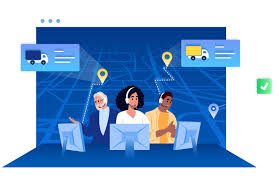
Automated dispatch systems provide live visibility into:
- vehicle locations,
- technician status,
- route progress,
- delivery timelines,
- and service completion updates.
Managers can quickly identify delays and make adjustments when needed.
Customers also benefit because they receive accurate updates instead of waiting without information.
Route Optimization Reduces Delays
Poor route planning is one of the biggest reasons businesses lose time and fuel.
Automated dispatch systems use:
- GPS data,
- traffic information,
- road conditions,
- and route analytics
to create more efficient travel routes.
This helps businesses:
- reduce fuel consumption,
- avoid traffic congestion,
- improve delivery speed,
- and minimize unnecessary travel time.
Smarter routing directly improves operational efficiency.
Better Communication Improves Customer Experience
Customers become frustrated when businesses fail to provide updates.
One major benefit of automation is improved communication.
Modern systems can automatically send:
- appointment reminders,
- estimated arrival times,
- service updates,
- and delay notifications.
This creates a smoother customer experience and reduces support calls.
Customers appreciate transparency and real-time communication during service delivery.
Workforce Productivity Increases
Employees perform better when operations are organized properly.
Automated systems help businesses:
- reduce confusion,
- eliminate repetitive coordination,
- improve scheduling,
- and balance workloads more efficiently.
Instead of spending time calling dispatchers repeatedly, field workers receive task details directly through mobile devices or connected systems.
This allows teams to focus more on completing work instead of managing communication manually.
Businesses Gain Better Operational Control
Automation gives managers stronger operational visibility and control.
Businesses can monitor:
- employee performance,
- service completion times,
- delivery efficiency,
- customer feedback,
- and operational bottlenecks.
These insights help businesses identify inefficiencies and improve workflows continuously.
Data-driven decisions are far more effective than relying on assumptions.
Automated Dispatching Helps Reduce Operational Costs
Operational inefficiencies can become expensive quickly.
Businesses often lose money through:
- fuel wastage,
- delayed services,
- overtime costs,
- inefficient scheduling,
- and unnecessary travel.
Automated systems reduce these issues through smarter coordination and better route planning.
Lower operational costs allow businesses to improve profitability while maintaining service quality.
Customer Expectations Are Changing Rapidly
Modern customers are influenced by services like:
- same-day delivery,
- live order tracking,
- ride-sharing apps,
- and instant notifications.
Because of this, customers now expect real-time service visibility from almost every business.
Companies that fail to modernize operations may struggle to compete with digitally advanced competitors.
Automated dispatching helps businesses meet these growing customer expectations more effectively.
Industries Benefiting from Automated Dispatch Technology
Logistics and Transportation
Logistics companies use automation for:
- fleet coordination,
- route planning,
- shipment tracking,
- and delivery management.
Healthcare Services
Healthcare providers use dispatch systems for:
- home care visits,
- ambulance coordination,
- appointment scheduling,
- and mobile healthcare services.
HVAC and Maintenance Businesses
Service companies manage:
- technician assignments,
- emergency requests,
- repair scheduling,
- and field operations more efficiently.
Delivery Businesses
Courier and delivery companies rely heavily on:
- real-time tracking,
- dispatch automation,
- and optimized delivery routing.
Almost every field-based business benefits from smarter dispatch coordination today.
Cloud Technology Is Accelerating Dispatch Automation
Cloud-based dispatch systems allow businesses to:
- manage operations remotely,
- scale faster,
- improve collaboration,
- and access real-time data from anywhere.
Cloud platforms also support mobile workforce management more effectively.
Managers can monitor operations even when working remotely.
The Future of Dispatch Operations
Dispatch technology is evolving rapidly.
Future systems may increasingly use:
- Artificial Intelligence,
- predictive scheduling,
- IoT tracking,
- automated workforce optimization,
- and machine learning analytics.
Businesses are moving toward fully connected operational ecosystems where dispatching becomes faster, smarter, and more predictive.
Important Operational Insights
Here are some important trends shaping automated dispatch systems globally:
| Operational Trend | Business Impact |
|---|---|
| Businesses adopting workflow automation | Rapid growth |
| Increase in customer demand for real-time updates | Higher than ever |
| Companies improving delivery efficiency through automation | Significant improvement |
| Businesses investing in cloud-based dispatch systems | Continuously increasing |
| Operational delays reduced through optimized routing | Strong positive impact |
These trends show why automated dispatching is becoming essential for modern operations.
Conclusion
Modern businesses can no longer rely on manual coordination methods if they want to remain competitive in today’s fast-moving service environment. Customers expect speed, visibility, communication, and reliability — and businesses need smarter systems to meet those expectations consistently.
Automated dispatch technology helps companies reduce delays, improve workforce coordination, optimize routing, strengthen communication, and create better customer experiences through real-time operational visibility.
As industries continue modernizing operations, intelligent Dispatch Management Software is becoming a critical solution for businesses looking to improve efficiency, reduce operational costs, and deliver faster, more reliable services.
FAQs
What is automated dispatch technology?
Automated dispatch technology is a digital system that helps businesses manage scheduling, workforce assignment, route planning, and field operations more efficiently.
How does automated dispatching reduce delays?
It uses real-time data, intelligent scheduling, and optimized routing to assign tasks faster and reduce operational inefficiencies.
Which industries use dispatch management systems?
Industries like logistics, healthcare, transportation, maintenance services, HVAC, and delivery businesses commonly use dispatch automation systems.
Does dispatch automation improve customer experience?
Yes. Customers receive faster service, real-time updates, and better communication throughout the service process.
Can small businesses use automated dispatch software?
Yes. Many modern dispatch systems are scalable and suitable for both small businesses and large enterprises.