Streetwear has always thrived on stories — tales of hustle, rebellion, and friends turning a shared vision into something bigger than themselves. Few recent labels capture that spirit as vividly as Hellstar Clothing. In just a few short years, Hellstar has gone from a scrappy, self-funded project to one of the most talked-about names in contemporary streetwear, known for its cosmic graphics, dark-meets-hopeful visual language, and a devoted online following that treats every drop like an event.
The Origins of Hellstar
Hellstar was founded around 2019–2020 by Sean Holland, widely known online as “Seanie” or “Hellstar Seanie,” alongside a small circle of close friends who helped shape the brand’s early identity. Various accounts place the brand’s beginnings in Los Angeles and Las Vegas, and regardless of the exact city, the origin story follows a familiar streetwear blueprint: a group of young creatives with a shared love of fashion, music, and art, frustrated by the lack of labels that truly reflected their tastes, deciding to build one themselves.
What sets Hellstar’s founding story apart is its emotional undercurrent. Several interviews and brand retrospectives describe Holland’s journey as one rooted in personal struggle, faith, and perseverance — the kind of “against the odds” narrative that resonates deeply with a generation of streetwear fans who value authenticity as much as aesthetics. The name itself is often explained as a symbol of finding light within darkness, a duality that would go on to define the brand’s entire visual philosophy.
A Distinct Aesthetic: Where Darkness Meets Meaning
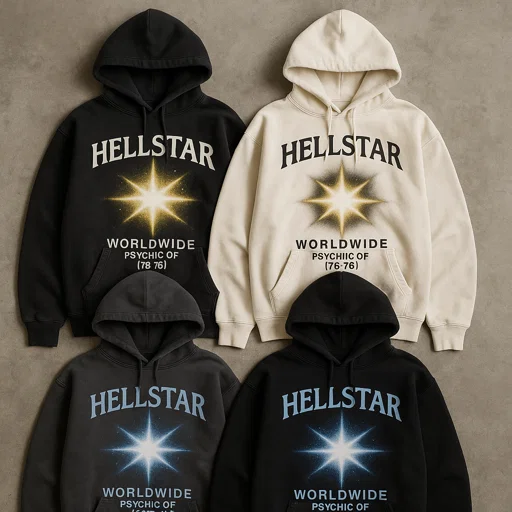
From the outset, Hellstar carved out a niche by refusing to pick a single lane. Its designs blend gothic, punk, and cosmic imagery with unexpectedly uplifting or spiritual messaging, creating pieces that feel simultaneously edgy and sincere. Flame motifs, celestial bodies, cracked textures, and bold typography are recurring visual signatures, often rendered through detailed screen-printing techniques that give garments a handcrafted, almost artisanal quality rather than a mass-produced feel.
This contrast — visually intense imagery paired with messages of resilience and hope — is central to why Hellstar has resonated so strongly. In a streetwear landscape saturated with logos and repetition, Hellstar’s willingness to tell a story through its graphics, rather than simply slap on a wordmark, has helped it stand out. Each capsule collection tends to build on a loose narrative or theme, giving fans something to interpret and discuss rather than just purchase.
Product Range and Drop Culture
Hellstar’s catalog centers on the staples that define modern streetwear: hoodies, T-shirts, sweatpants, shorts, and full matching sweatsuits, often released in tightly coordinated capsule collections. These capsules — sometimes numbered, like “Capsule 9.0” or “Capsule 10” — are central to the brand’s growth strategy. Rather than maintaining a constantly available catalog, Hellstar leans into scarcity, releasing limited quantities of each design and letting demand build around anticipation.
This drop-based model is a deliberate echo of the streetwear playbook pioneered by brands like Supreme and later refined by labels such as Chrome Hearts and Gallery Dept — brands Hellstar is now frequently compared to and even displayed alongside on multi-brand retail platforms. Drops are announced through social media, often with exact release times down to the minute, and pieces frequently sell out within hours. That scarcity has helped fuel a thriving resale market, with pieces regularly appearing on platforms like StockX, where value can climb well above retail price for particularly sought-after designs.
One feature that distinguishes Hellstar from many of its streetwear peers is its use of NFC (Near Field Communication) authentication technology embedded in garments. This allows customers to verify authenticity by tapping their phone against a tagged piece of clothing — a direct response to the rampant counterfeiting that plagues hyped streetwear brands. In a market where fakes can be nearly indistinguishable from originals, this kind of built-in verification has become an important trust signal for collectors and resellers alike.
Building a Community, Not Just a Customer Base
Much of Hellstar momentum has been fueled by social media, particularly platforms like TikTok, where Holland and his collaborators have been unusually transparent about the brand’s journey. Rather than presenting a polished, distant corporate image, Hellstar’s founders frequently share behind-the-scenes content — talking through early struggles, business lessons, and the day-to-day realities of building a fashion label from nothing. This openness has helped position Hellstar not just as a clothing company but as an aspirational story that fans feel personally invested in.
That authenticity has translated into real-world visibility. Hellstar has made appearances at major streetwear events like ComplexCon, further cementing its place among the labels taken seriously by the broader sneaker and streetwear community. The brand has also been linked to potential collaborations with major players in the sneaker world, including rumored Adidas partnerships, signaling that Hellstar’s ambitions extend well beyond its original grassroots audience.
Why Hellstar Resonates
Several factors help explain Hellstar’s rapid ascent in an incredibly crowded streetwear market:
Narrative-driven design. Instead of relying purely on branding recognition, Hellstar’s graphics tell a story, giving pieces emotional weight beyond their aesthetic appeal.
Scarcity and hype mechanics. Limited drops create urgency, driving both immediate sales and long-term resale value, which in turn reinforces the brand’s desirability.
Founder-led authenticity. Sean Holland’s visible, personal presence — sharing struggles and milestones directly with fans — builds a level of trust and loyalty that faceless corporate brands struggle to replicate.
Technological trust-building. The use of NFC authentication addresses a real pain point in streetwear culture, differentiating Hellstar from competitors still vulnerable to counterfeiting.
Cross-genre appeal. By blending gothic, cosmic, and streetwear influences, Hellstar draws in fans from multiple subcultures rather than limiting itself to a single aesthetic niche.