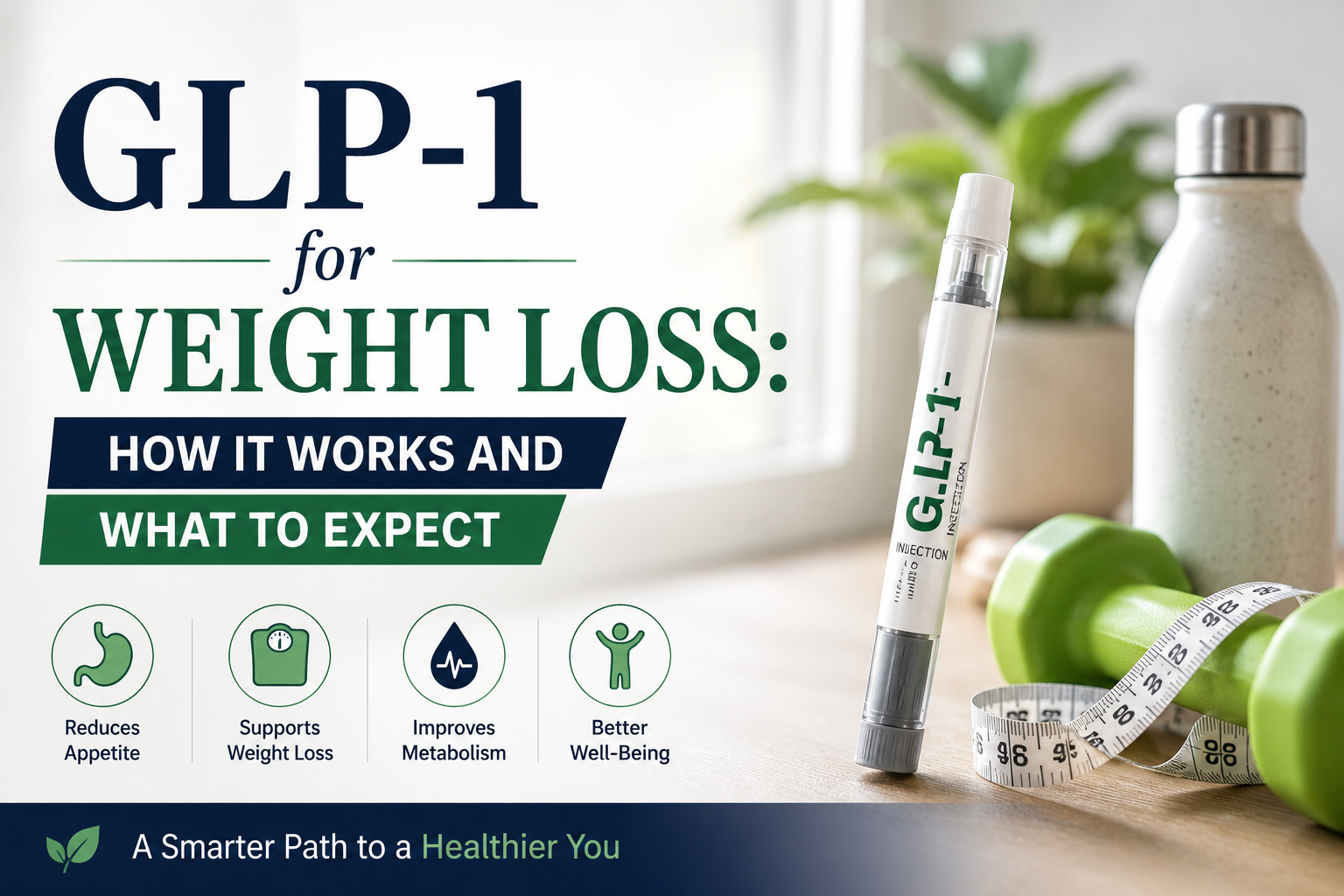
If you’ve been researching weight loss options lately, you’ve probably heard about GLP-1 medications. These treatments have gained significant attention because many people have experienced noticeable weight loss while using them. However, with social media success stories and dramatic before-and-after photos everywhere, it’s easy to develop unrealistic expectations.
The truth is that GLP-1 medications can be highly effective for weight loss, but results vary from person to person. Understanding what you can realistically expect may help you set achievable goals and avoid disappointment during your weight loss journey.
What Are GLP-1 Medications?
GLP-1 (Glucagon-Like Peptide-1) receptor agonists are medications that mimic a naturally occurring hormone in the body. This hormone helps regulate appetite, blood sugar levels, and digestion.
These medications work by:
- Reducing hunger signals in the brain
- Helping you feel full longer after meals
- Slowing stomach emptying
- Reducing food cravings
- Supporting better portion control
Because of these effects, many people naturally consume fewer calories without feeling deprived.
How Much Weight Can You Realistically Lose?
One of the most common questions people ask is how much weight they can expect to lose on a GLP-1 medication.
While individual results vary, clinical studies have shown that many users lose between 10% and 20% of their starting body weight when combining GLP-1 treatment with healthy lifestyle changes.
For example:
| Starting Weight | 10% Weight Loss | 15% Weight Loss | 20% Weight Loss |
|---|---|---|---|
| 180 lbs | 18 lbs | 27 lbs | 36 lbs |
| 220 lbs | 22 lbs | 33 lbs | 44 lbs |
| 250 lbs | 25 lbs | 37.5 lbs | 50 lbs |
It’s important to remember that these results usually occur over several months rather than a few weeks.
What Results Can You Expect in the First Month?
Many people hope for dramatic weight loss immediately after starting treatment. However, the first month is often more about adjustment than major transformation.
During the first few weeks, you may notice:
- Reduced appetite
- Less interest in snacking
- Smaller meal portions
- Fewer cravings for sugary foods
- Initial weight loss of 2 to 8 pounds
Some people lose more, while others lose very little during the first month. Early progress often depends on factors such as starting weight, diet quality, activity level, and medication dosage.
Weight Loss Timeline: Month by Month
Month 1
Most users experience appetite suppression and begin developing healthier eating habits. Weight loss may be gradual while the body adjusts to treatment.
Months 2–3
This is when many people start noticing more consistent progress. Clothes may fit differently, energy levels may improve, and weight loss becomes more noticeable.
Months 4–6
Significant results often occur during this period. Many users report steady fat loss and improved confidence as healthier habits become routine.
Months 6–12
Long-term users often achieve their most meaningful results during this stage. Weight loss may slow compared to the initial months, but continued progress is common.
Why Some People Lose More Weight Than Others
Not everyone responds to GLP-1 medications in the same way. Several factors can influence results.
Starting Weight
Individuals with higher starting body weight often lose more pounds overall, although percentage-based weight loss may be similar.
Lifestyle Habits
Medication alone is not a magic solution. People who combine GLP-1 treatment with healthier eating patterns and regular physical activity often experience better outcomes.
Consistency
Taking medication as prescribed and following medical guidance can significantly impact results.
Sleep and Stress
Poor sleep and chronic stress may interfere with weight loss by affecting hormones that regulate appetite and metabolism.
Individual Biology
Genetics, hormone levels, age, and underlying health conditions can all influence how the body responds.
Common Weight Loss Plateaus
Many people experience periods where weight loss slows or temporarily stops. This is completely normal.
A plateau does not necessarily mean the medication has stopped working. As body weight decreases, calorie needs change, and the body naturally adapts.
During a plateau, consider:
- Reviewing portion sizes
- Increasing daily movement
- Prioritizing protein intake
- Improving sleep quality
- Staying hydrated
- Remaining consistent with treatment
In many cases, progress resumes after a few weeks.
Beyond the Number on the Scale
Weight loss is only one measure of success.
Many GLP-1 users report additional benefits such as:
- Better appetite control
- Reduced emotional eating
- Improved blood sugar management
- Increased energy levels
- Better mobility
- Improved confidence
- Healthier relationship with food
Even when the scale moves slowly, these improvements can have a meaningful impact on overall health and quality of life.
Can Weight Return After Stopping GLP-1?
Weight regain is possible after discontinuing GLP-1 treatment, especially if healthy habits are not maintained.
These medications help control appetite while they are being used. Once treatment stops, hunger levels may gradually increase again.
This is why healthcare professionals often recommend focusing on long-term lifestyle changes alongside medication. Sustainable eating habits, regular exercise, and ongoing support can help maintain results over time.
Setting Realistic Expectations
The biggest mistake many people make is expecting rapid, effortless weight loss.
A realistic expectation is steady progress over several months rather than dramatic changes within a few weeks. While some individuals experience substantial transformations, others achieve more moderate but still meaningful results.
Successful weight loss with GLP-1 treatment is often the result of medication, consistency, healthy eating, physical activity, and patience working together.
Final Thoughts
GLP-1 medications For Weight Loss have changed the landscape of weight management and may help many individuals achieve significant weight loss. However, realistic expectations are essential. Most users see gradual progress rather than overnight results, and long-term success often depends on combining treatment with sustainable lifestyle habits.
Instead of focusing solely on rapid weight loss, aim for steady improvements in health, energy, eating habits, and overall well-being. When viewed as part of a comprehensive weight management strategy, GLP-1 treatment can be a valuable tool for achieving lasting results.
Frequently Asked Questions
How quickly do GLP-1 medications start working?
Many people notice reduced appetite within the first few days or weeks, but significant weight loss typically becomes more noticeable after several weeks of consistent use.
What is considered good weight loss on a GLP-1 medication?
Losing 1 to 2 pounds per week is generally considered healthy and sustainable. Individual results may vary.
Will everyone lose weight on GLP-1 medications?
Not necessarily. While many people experience weight loss, results differ based on lifestyle, dosage, medical conditions, and individual response.
Do I still need to diet while taking GLP-1?
Healthy eating habits remain important. GLP-1 medications can help reduce appetite, but long-term success often requires balanced nutrition and lifestyle changes.
Can exercise improve GLP-1 weight loss results?
Yes. Regular physical activity can support fat loss, preserve muscle mass, improve overall health, and help maintain long-term results.