Plenty of people go years between dental visits, and often it isn’t laziness or cost that keeps them away. It’s a set of quietly held beliefs about check-ups that simply aren’t true. These myths feel like common sense, which is exactly why they’re so effective at talking people out of an appointment they’d benefit from.
Clearing them up matters, because the beliefs that keep people from the dentist tend to be the same ones that let small problems grow into large, expensive ones. Here are the most common dental check-up myths, and the reality behind each.
If Nothing Hurts, There’s Nothing Wrong
This is the most widespread and the most damaging myth of all.
The assumption sounds reasonable: no pain, no problem. But dental issues are usually painless in their early stages. Tooth decay begins in the outer enamel, where there are no nerves to feel it, and only causes pain once it has reached deep into the tooth. Gum disease, similarly, can quietly destroy the support around teeth for years without hurting. By the time pain arrives, the problem is often well advanced and far more involved to treat.
A check-up exists precisely to find these problems during the silent stage, when treatment is simple. Waiting for pain means waiting until the cheapest, easiest window has already passed.
A Check-Up Is Just a Quick Look and a Clean
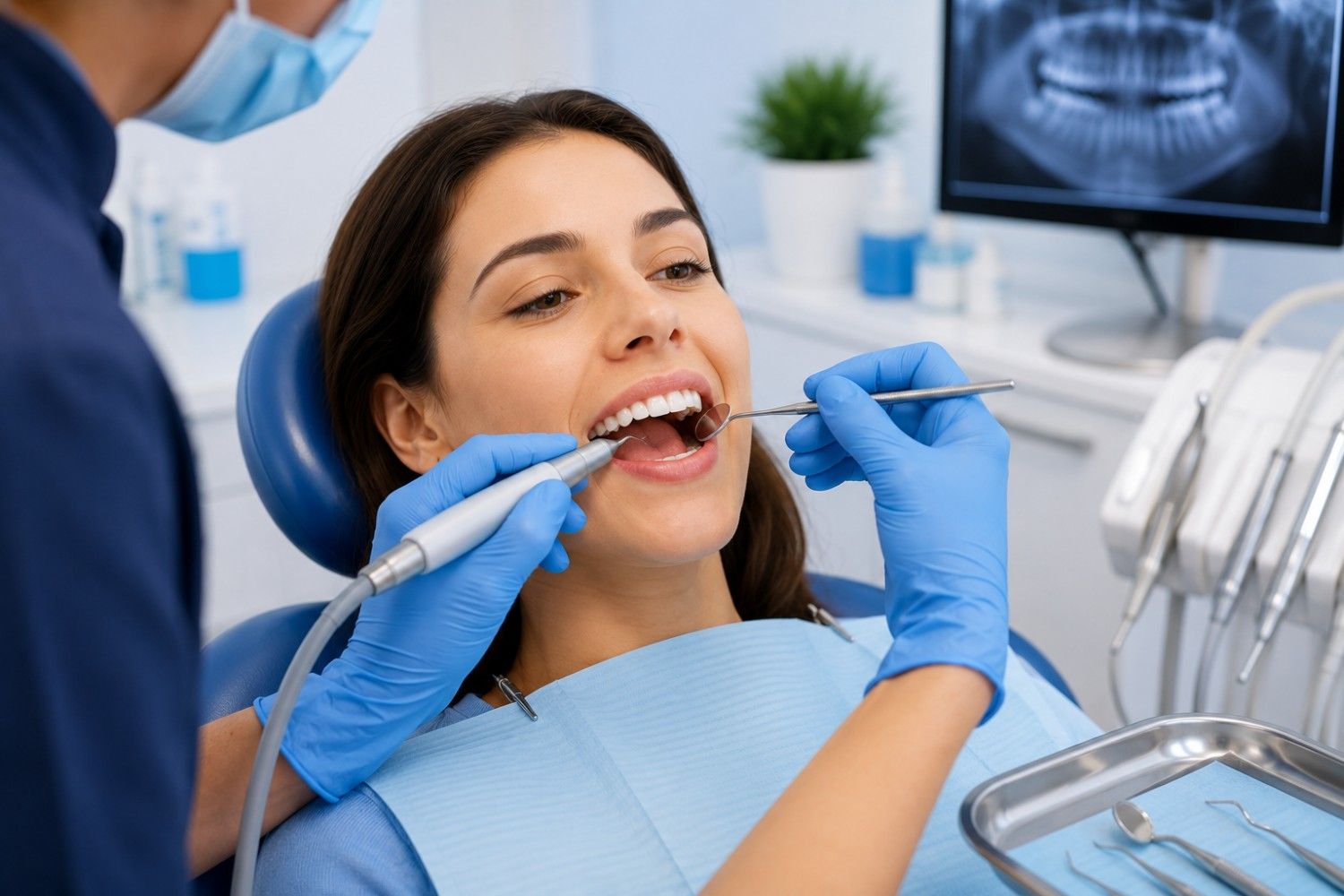
Many people underestimate a dental examination, picturing a glance and a polish. In reality a good check-up is a thorough health assessment.
The dentist checks for decay, including between the teeth where it can’t be seen or felt, often using X-rays. Gum health is measured to catch early disease. Existing fillings and crowns are inspected, and wear patterns from grinding are noted. Importantly, the soft tissues of the mouth, tongue, cheeks and throat are examined for anything unusual, including early signs of oral cancer, in a screening that takes about a minute and that most people receive nowhere else. Far from a quick look, it’s a genuine check of overall oral health.
Brushing Well at Home Makes Check-Ups Unnecessary
Good home care is essential, but it doesn’t replace professional visits, and believing it does leaves gaps.
Even diligent brushing and flossing can’t remove tartar, the hardened deposit that forms when plaque isn’t cleaned away in time. Tartar bonds to the teeth and can only be removed with dental instruments. Home care also can’t let someone see between their own teeth or below the gumline, where problems often begin. Home care and professional care do different jobs; one manages plaque day to day, the other removes what home care can’t reach and catches what the person can’t see. Anyone wanting to keep their teeth healthy is best served by a good routine at home alongside regular visits to a Local Dentist in Campbelltown.
Dental Visits Are Always Expensive
The fear of a large bill keeps many people away, but this myth has the economics backwards.
A routine check-up is one of the least expensive dental appointments there is, and it’s precisely what prevents the costly ones. Catching a small cavity early means a simple filling. Avoiding the check-up until the tooth aches often means root canal treatment and a crown, at many times the cost, or an extraction and replacement that costs more again. Regular check-ups are the affordable option; emergencies are the expensive one. Skipping visits to save money usually leads to spending far more later.
There’s No Point Going After a Long Gap
Some people stay away simply because it’s already been so long, feeling there’s no point now, or dreading being judged.
This is worth letting go of. Long gaps are among the most common things dentists see, and no reasonable practitioner keeps score or lectures. The conversation is always about what happens next, not what happened before. A first visit after years away is usually an examination and X-rays, followed by a plan that can be staged over time, dealing with anything urgent first and spreading the rest out so it’s manageable. Going back after a long absence is a positive step, not something to feel awkward about.
Check-Ups Only Matter for Teeth
The final myth is that a dental visit concerns only the teeth. In fact the mouth reflects broader health, and a dentist may notice signs of issues well beyond it.
Persistent gum problems can relate to conditions such as diabetes. Certain patterns of enamel erosion can point to acid reflux. A dry mouth may reflect medication or another underlying cause. The soft-tissue screening can catch early signs of serious disease. A dentist doesn’t diagnose these conditions, but they may be the first to notice something and suggest it be looked into. For reliable, non-commercial information on oral health and dental check-ups, Healthdirect, the Australian Government’s health information service, is a trustworthy reference.
The Takeaway
The beliefs that keep people from the dentist tend to share a flaw: they assume dental problems announce themselves, cost too much to bother with, or don’t matter until they hurt. The reality is the reverse. Problems are silent early, check-ups are the cheap part, and regular visits catch trouble while it’s still small.
Letting go of these myths is often the first step back to healthy teeth. A check-up is quick, affordable, and quietly one of the more valuable health appointments a person can keep, whether or not anything hurts. For anyone in the area who has been putting it off, a practice such as Bradbury Dental Surgery is a straightforward place to start again.