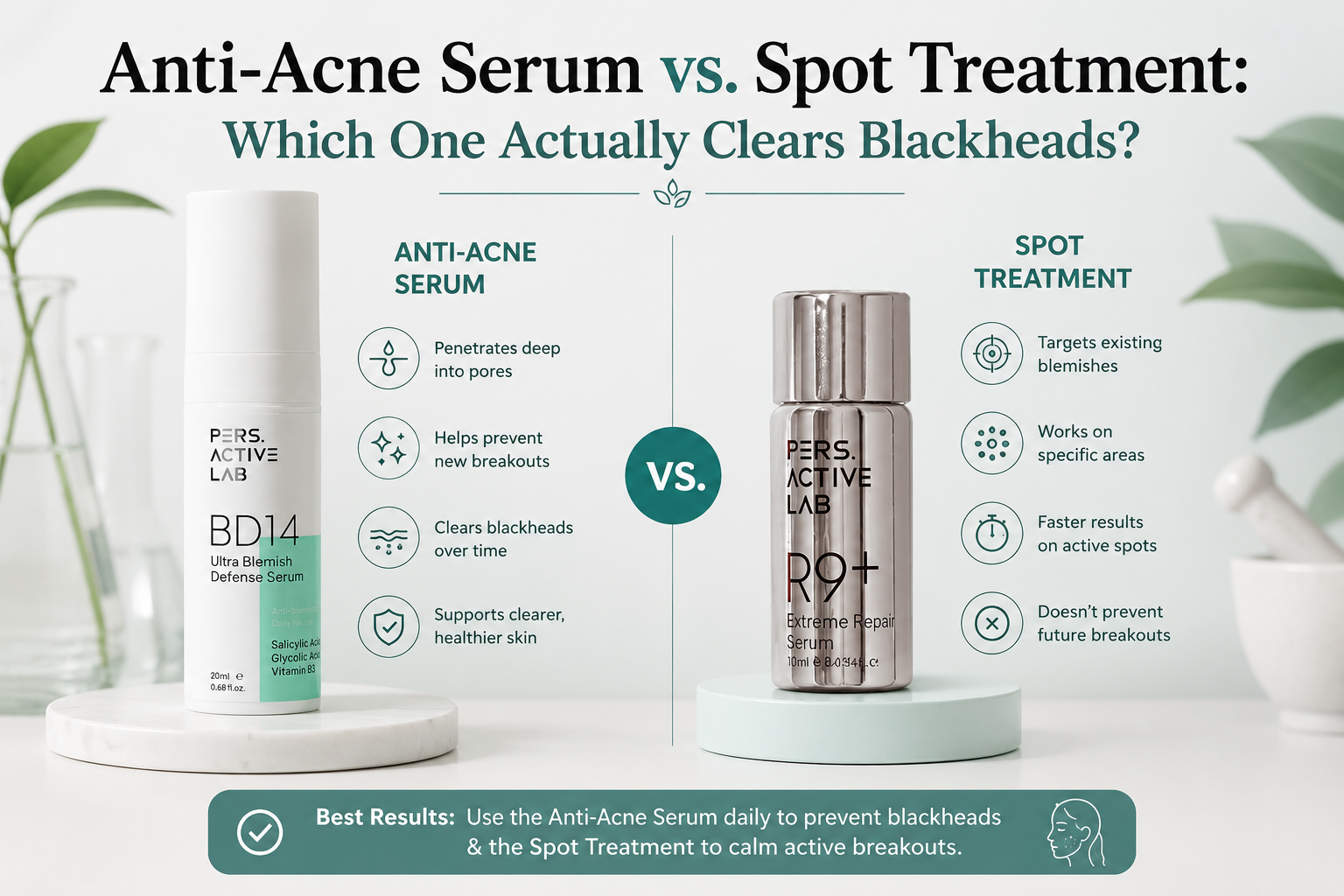
For most people dealing with blackheads, a serum works better than a spot treatment because blackheads form across pores, not in a single isolated area. Spot treatments are designed to target one active breakout at a time, while an anti acne serum treats the whole face consistently, addressing the oil buildup and clogged pores that cause blackheads in the first place. That said, the “best” choice depends on how widespread the blackheads are and what’s actually causing them.
What Blackheads Really Are
Blackheads are a mild form of acne called open comedones. They form when a hair follicle becomes clogged with excess sebum (oil) and dead skin cells. Because the pore stays open at the surface, the trapped material oxidizes when exposed to air, turning dark or black — this is why blackheads are not “dirt” and cannot simply be scrubbed away.
Three main factors drive blackhead formation:
- Excess oil production, often triggered by hormones, humidity, or genetics
- Slow skin cell turnover, which lets dead cells accumulate inside the pore
- Pore congestion from comedogenic products, including heavy moisturizers or makeup
Understanding this mechanism is key to knowing why one treatment format works better than another for this specific concern.
How Spot Treatments Work
Spot treatments are concentrated formulas often with benzoyl peroxide, sulfur, or high-percentage salicylic acid applied directly onto an active blemish. They’re designed for inflammatory acne: red, swollen pimples or pustules that need fast, localized action to reduce swelling and kill bacteria.
The problem with using a spot treatment on blackheads is that blackheads aren’t a single, isolated lesion. They typically appear in clusters across the nose, chin, and forehead (areas with more oil glands). Dabbing a spot treatment on ten or twenty individual blackheads isn’t practical, and the harsh, high-concentration actives can over-dry and irritate surrounding skin without actually addressing the oil and turnover issues causing new blackheads to form.
How an Anti Acne Serum Works
An anti-acne serum is formulated for broader, preventive, and ongoing use. Instead of one aggressive active, it typically blends several gentler ingredients at calibrated concentrations designed to work together across the whole face:
- Salicylic acid (BHA) – oil-soluble, so it penetrates the pore lining to dissolve the buildup that creates blackheads
- Niacinamide – helps regulate sebum production and reduces the appearance of enlarged pores over time
- Retinoids or retinol alternatives – speed up cell turnover so dead skin doesn’t accumulate and re-clog pores
- Azelaic acid – gently exfoliates while calming inflammation and redness
Because a serum is applied to the entire face (or the full T-zone) rather than one spot, it treats existing blackheads while also preventing new ones from forming in neighboring pores which is exactly why dermatologists generally recommend serums as the primary treatment for blackhead-prone skin, reserving spot treatments for occasional inflamed breakouts.
The Power of Less: Why More Actives Isn’t Better
A common mistake is layering multiple strong acne actives at once a salicylic acid cleanser, a retinol serum, and a benzoyl peroxide spot treatment, all in the same routine. This kind of over-treatment strips the skin barrier, leading to irritation, redness, and paradoxically, more oil production as skin tries to compensate.
The more effective approach is using essential actives in precise, balanced ratios rather than stacking every “acne-fighting” ingredient available. A well-formulated anti-acne serum is built around this principle: enough active ingredient to be effective, without overwhelming the skin barrier.
Repair First: Don’t Skip Barrier Health
Skin with a compromised barrier from over-exfoliation, harsh cleansers, or chronic acne treatment is often more prone to congestion and irritation, not less. Before ramping up actives, it’s worth confirming the skin barrier is intact. Signs of a weakened barrier include persistent tightness, stinging when applying products, or breakouts that seem to get worse despite treatment.
This is where a personalized, data-informed approach helps. Rather than guessing which actives your skin can tolerate, AI-powered skin analysis tools such as the one offered by Skin PAL assess your skin condition first, including barrier strength, oil levels, and pore congestion, before recommending a routine. This “repair first” logic prevents people from jumping straight into aggressive acne treatment on skin that isn’t ready for it.
A Smarter, More Personalized Approach
Generic serums and spot treatments are formulated for the “average” user, but blackhead severity, skin type, and sensitivity vary significantly from person to person. This is where AI-driven skin analysis platforms are changing the approach to acne care.
Instead of a one-time product recommendation, platforms like PAL generate a full personalized plan: an assessment of your specific skin condition, an explanation of what’s causing your blackheads, ingredient recommendations matched to your skin’s tolerance, a step-by-step routine, and lifestyle guidance all delivered as a clear, easy-to-follow report. Each concern is explicitly linked to its causes, treatment, and prevention, so users understand why a product is recommended, not just what to buy.
These tools also track skin progress over time rather than offering a single snapshot judgment, so you can see whether your Skin Score and pore congestion are actually improving month over month. Many go beyond acne-specific advice too, factoring in hydration levels, sunscreen consistency, and other lifestyle habits that influence breakouts while also flagging hidden ingredient sensitivities before they cause a reaction. Skin PAL formulations are Taiwan-made and dermatologist-reviewed, reflecting the same repair-first, less-is-more philosophy discussed above.
Which Should You Choose?
| Concern | Best Option |
|---|---|
| Multiple blackheads across nose/chin | Anti acne serum (whole-face treatment) |
| A single inflamed, painful pimple | Spot treatment |
| Ongoing prevention of new blackheads | Anti acne serum + consistent routine |
| Sensitive or reactive skin | Personalized plan with barrier repair first |
For most blackhead-prone skin, a well-formulated anti acne serum used consistently will outperform occasional spot treatment, because it addresses the root causes oil production and cell turnover rather than just the visible symptom.
FAQs
Can I use both a serum and a spot treatment together?
Yes, but introduce them separately. Use your anti-acne serum as your daily routine, and reserve spot treatment only for occasional, inflamed breakouts. Applying both to the same area at once can over-dry the skin.
How long does it take to see results from an anti-acne serum?
Most people notice smoother texture and reduced congestion within 4–6 weeks, since it takes roughly one full skin cell turnover cycle to see meaningful change.
Will a serum remove blackheads that are already there?
It can gradually clear existing blackheads by dissolving trapped oil and debris, though extraction by a professional may speed up removal of stubborn ones.
Is it normal for skin to purge before it clears?
Mild purging can occur when introducing actives like retinoids, as they accelerate turnover of congestion already forming beneath the skin. This typically subsides within a few weeks.
When should I see a dermatologist instead of self-treating?
If blackheads are severe, persistent despite consistent care, or accompanied by painful cystic breakouts, it’s best to consult a dermatologist for a tailored treatment plan rather than continuing to self-treat.