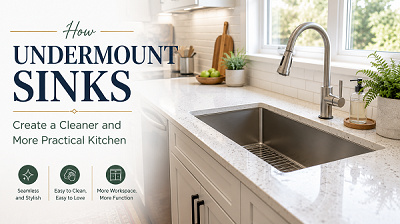
Kitchen sinks handle some of the hardest daily work in the home. They support meal preparation, dishwashing, cleaning, rinsing, and many other small tasks. Therefore, sink design should be considered early when planning new countertops rather than treated as a minor accessory at the end. At Keystone Granite OH, we often discuss sink style with homeowners who are planning countertops and kitchens in Dublin, Columbus, Ohio. The sink needs to match the countertop material, cabinet size, faucet layout, cleaning habits, and daily routine. For many homeowners, an undermount design provides a clean and practical solution.
What Makes an Undermount Sink Different?
Unlike drop-in sinks that have a visible rim resting on top of the counter, undermount sinks attach beneath the countertop. Therefore, the countertop edge remains visible around the sink opening, creating a smooth transition from the work surface into the bowl. This detail may look small, but it changes both appearance and cleaning. Crumbs and water can be wiped directly from the countertop into the sink without catching on a raised rim. As a result, many homeowners choose this design when installing stone countertops.
Key Takeaways
- Undermount sinks create a smooth countertop edge that can make cleaning easier and improve the finished appearance.
- The sink must match the countertop material, cabinet width, bowl size, faucet configuration, and support requirements.
- Professional planning matters because the cutout, sealing, mounting, and countertop support all affect long-term performance.
Why the Clean Look Appeals to Homeowners
Modern kitchens often focus on smooth surfaces and fewer visual interruptions. Therefore, undermount sinks fit naturally into many current designs. The sink edge stays below the countertop, so the counter becomes the main visible surface. This works especially well with granite, quartz, quartzite, and other solid countertop materials. However, undermount sinks are not limited to modern kitchens. A stainless steel bowl can work with traditional cabinetry, while a white or dark sink can support transitional styles.
Easier Countertop Cleaning
One of the most practical benefits comes from cleaning. With a top-mounted sink, crumbs may gather around the visible rim. In contrast, an undermount sink allows food particles and water to move directly into the bowl. Therefore, wiping the countertop can feel faster and easier. However, the joint between the sink and countertop still needs routine care. Water, soap, and food can collect near the seam if it is neglected. Regular cleaning helps maintain a neat appearance and supports the seal around the sink.
Choosing the Right Sink Material
Sink material affects durability, noise, appearance, and cleaning. Stainless steel remains a popular choice because it is practical and works with many kitchen styles. However, gauge, finish, and sound-deadening features can vary. Composite sinks can provide deeper color and a softer appearance. Meanwhile, porcelain and fireclay styles can create a more classic look. The best material depends on how the kitchen is used. A busy family may focus on durability and easy cleaning. Meanwhile, a design-focused kitchen may place more emphasis on matching the sink color to the countertop and cabinetry.
Single Bowl or Double Bowl?
Sink layout affects everyday use. A large single bowl provides more open space for sheet pans, pots, and large cookware. Therefore, it can be useful for households that cook frequently. A double bowl separates tasks. One side can hold dishes while the other remains open for rinsing or food preparation. However, each bowl becomes smaller. Therefore, homeowners should think about what they wash most often rather than choosing based only on appearance.
Sink Size Must Match the Cabinet
The sink cannot be selected independently from the base cabinet. A large sink requires enough cabinet width for the bowl, mounting hardware, plumbing, garbage disposal, and nearby connections. Therefore, cabinet dimensions should be confirmed before ordering. This becomes especially important when homeowners want very wide single-bowl sinks. A sink that technically fits may still leave limited room for plumbing or structural support. As a result, early planning can prevent changes later.
Countertop Material Matters
Undermount sinks need a countertop that can support a finished cut edge. Stone materials are commonly used because they can be cut and polished around the opening. However, the exact sink cutout needs careful fabrication. The edge can be designed in different ways. For example, the countertop may slightly cover the sink rim, align with it, or reveal a small part of it. Each approach creates a different appearance and cleaning experience. Therefore, homeowners should understand the planned reveal before fabrication begins.
Faucet Placement Needs Early Planning
The faucet, soap dispenser, filtered-water tap, and other accessories usually sit behind or beside the sink. Therefore, the countertop fabricator needs the correct hole locations. A large sink may leave less space behind the bowl, especially on narrow countertops. Likewise, a large faucet needs enough room to operate without hitting a wall or window trim. This is another reason why sink and faucet decisions should be made before the countertop is cut.
Supporting Heavy Sinks
Some sinks are much heavier than others. Therefore, they need proper support rather than relying only on adhesive or sealant. Support systems may attach to the cabinet structure or use mounting hardware designed for the sink and countertop. This becomes especially important with heavy composite, cast iron, or fireclay sinks. A secure installation helps prevent movement and reduces stress around the countertop opening.
Why Sealant Quality Matters
Water is constantly present around a kitchen sink. Therefore, the seam between the sink and countertop must be sealed correctly. A poor seal can allow moisture to collect in hidden areas. Over time, this can create staining, odor, or damage to surrounding cabinet materials. Proper preparation and sealant application are therefore important parts of installation. Homeowners should also inspect the seam during routine cleaning and address any visible separation.
Pairing the Sink With Countertop Color
The sink can either blend into the countertop or create contrast. A stainless steel sink works with almost any stone color. Meanwhile, a white sink can create a bright, clean appearance. Dark sinks can add contrast against light countertops. However, water spots may be more visible on some finishes. The countertop pattern also matters. A very dramatic stone can remain the main focal point when paired with a simple sink. Meanwhile, a quieter countertop can support a more distinctive sink color or shape.
Sink Placement Affects Workflow
Where the sink sits can influence the entire kitchen. A sink placed on an island can create a central preparation area. However, it may also make dirty dishes more visible from nearby rooms. A sink beneath a window can create a more traditional layout and keep the island clear for seating. Meanwhile, placing the sink near the dishwasher can make cleanup more efficient. Therefore, plumbing, workflow, views, and seating should all be considered together.
Planning Professional Installation
A sink installation includes more than lowering a bowl into an opening. The countertop cutout must be accurate. The sink must sit at the correct level. The mounting system must provide stable support. In addition, the seam must be sealed properly. When homeowners look for sink installation in Columbus, it helps to choose a team that can coordinate the sink with countertop fabrication, cabinet dimensions, and plumbing requirements. This coordination can reduce delays and prevent last-minute changes.
Undermount Sinks and Resale Appeal
Kitchen buyers often notice the countertop and sink immediately. Therefore, a clean sink installation can support the overall finished appearance of the kitchen. However, resale value should not be the only reason to choose a sink. Daily comfort matters more. A sink that is too small, too deep, or poorly placed may become frustrating even if it looks attractive. Therefore, homeowners should balance appearance with personal use.
Maintenance Over Time
Undermount sinks remain relatively easy to maintain when the installation is sound. The bowl should be cleaned according to its material. Meanwhile, the countertop edge and seam should be kept dry and clean when possible. Hard water may leave marks on both the sink and faucet. Therefore, wiping water after use can help maintain the finish. Homeowners should also avoid placing excessive weight on unsupported edges or using strong chemicals that could damage sealant.
Final Thoughts
An undermount sink can make a kitchen feel cleaner, more open, and easier to maintain. However, its success depends on careful planning. We recommend choosing the sink together with the countertop, base cabinet, faucet, plumbing, and dishwasher layout. This coordinated approach reduces problems and improves daily use. For homeowners in Dublin, Columbus, Ohio, an undermount sink can be a practical addition to both traditional and modern kitchens. When size, material, support, sealing, and placement are handled correctly, the sink becomes more than a design feature. Instead, it becomes a reliable part of the kitchen’s everyday workflow.