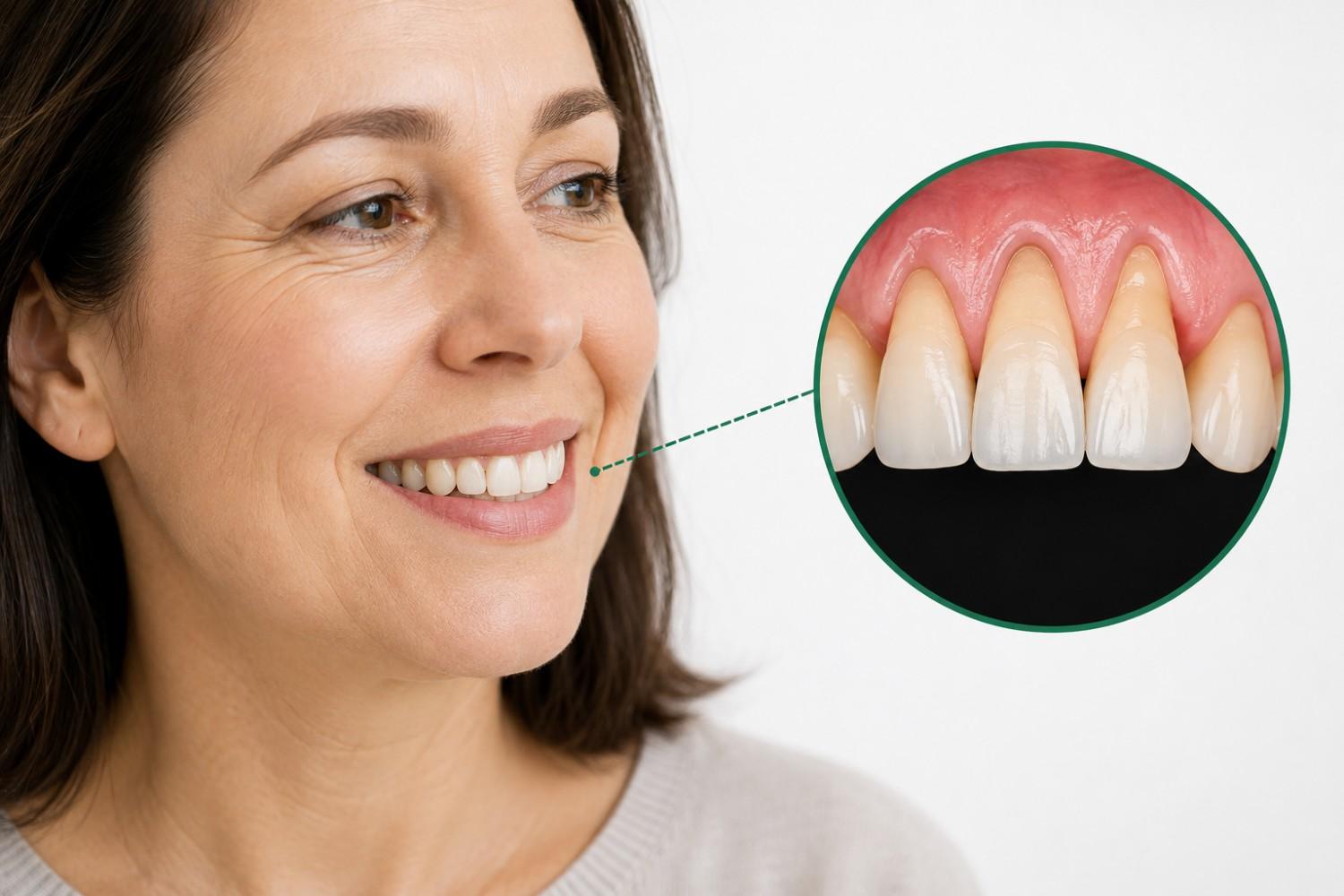
“Long in the tooth” is an old phrase for getting older, and like many old sayings, it’s rooted in something real. As people age, their teeth often do appear longer, not because the teeth themselves grow, but because the gums around them gradually pull back. This is gum recession, and it’s one of the more common dental changes people notice over the years.
Gum recession is worth understanding because it’s often preventable, sometimes treatable, and occasionally a sign of something that needs attention. Here’s what causes gums to recede, why it matters beyond appearance, and what can be done about it.
What Gum Recession Actually Is
Gum recession is the process by which the gum tissue surrounding the teeth wears away or pulls back, exposing more of the tooth and, eventually, the tooth’s root.
Normally, the gums sit snugly around each tooth, covering the root and meeting the tooth at a neat margin. When the gums recede, that margin moves downward (or upward, on the lower teeth), exposing the root surface that was previously protected. Because the exposed root makes the tooth look larger, the visible effect is teeth that appear longer than they used to.
This exposed root is the crux of why recession matters. Unlike the crown of the tooth, which is covered in hard, protective enamel, the root is covered by a much thinner, softer material called cementum, and beneath that lies dentine. Neither is as tough as enamel, which is why receded areas become vulnerable in ways the rest of the tooth isn’t.
Why It Happens
Gum recession has several causes, and often more than one is at work.
Brushing too hard is one of the most common and most preventable. Vigorous scrubbing, particularly with a hard-bristled brush, physically wears the delicate gum tissue away over time. Many people believe harder brushing cleans better, when in fact it damages the gums and the enamel both.
Gum disease is another major cause. The inflammation and infection of periodontal disease destroys gum tissue and the bone supporting the teeth, causing the gums to recede as the disease progresses. This is one reason recession should never be automatically dismissed as simply cosmetic.
Other contributors include the natural effects of age, genetics (some people are simply more prone to it), teeth grinding and clenching, which places stress on the teeth and gums, and a build-up of hardened tartar that isn’t removed. Even factors like tongue or lip piercings rubbing against the gums, or teeth that are crowded or out of alignment, can play a part.
Why It Matters Beyond Appearance
While many people first notice gum recession because of how it looks, its significance goes well beyond aesthetics.
The most common practical consequence is sensitivity. With the root surface exposed, the tooth often becomes sensitive to hot, cold and sweet things, because the dentine beneath is connected to the tooth’s nerve. This can make eating and drinking uncomfortable.
The exposed root is also more vulnerable to decay. Without the protection of enamel, root surfaces develop cavities more easily, and these root cavities can be trickier to treat. Recession can also be a visible sign of underlying gum disease, which, left unchecked, threatens the support that holds teeth in place and can ultimately lead to tooth loss. For reliable, non-commercial information on gum health and looking after teeth, Healthdirect, the Australian Government’s health information service, is a trustworthy reference.
What Can Be Done
The good news is that gum recession can usually be managed, and often prevented, though it’s worth knowing that receded gum tissue doesn’t grow back on its own.
The first priority is addressing the cause. If harsh brushing is to blame, switching to a soft brush and a gentler technique halts further damage. If gum disease is the driver, professional treatment to control it is essential. If grinding is a factor, a custom night splint can help. Stopping the cause is what prevents the recession from getting worse.
For the sensitivity that often comes with recession, desensitising toothpaste used consistently helps many people, and a dentist can apply treatments such as fluoride varnish or other measures for more stubborn cases. Where recession is severe, or where it threatens the tooth, there are dental procedures, including gum grafting, that can cover exposed roots, though whether these are needed depends on the individual situation.
Most importantly, regular dental check-ups allow recession to be caught early and monitored. A dentist can measure the gums over time, identify the cause, and step in before minor recession becomes a significant problem. Anyone noticing their teeth looking longer, or experiencing new sensitivity, would be wise to have it assessed. A practice such as Appin Dental Surgery can determine what’s driving the recession, treat any underlying gum disease, and advise on protecting the teeth and gums going forward.
The Bottom Line
Teeth appearing longer with age is usually the visible sign of gum recession, the gradual pulling back of the gums to expose more of the tooth and its root. Far from being purely cosmetic, it can bring sensitivity, a raised risk of root decay, and, where gum disease is involved, a threat to the long-term stability of the teeth.
The encouraging part is that recession is largely preventable, brushing gently, keeping gums healthy, and attending regular check-ups goes a long way, and where it does occur, it can usually be managed once the cause is identified. Noticing the change early and acting on it is the key to keeping both the appearance and the health of the teeth intact for the long term.
Frequently Asked Questions
Do Gums Grow Back After Receding?
No, gum tissue that has receded does not grow back on its own. However, the process can be stopped from worsening by addressing the cause, such as switching to gentle brushing or treating gum disease. Where recession is severe, dental procedures including gum grafting can cover exposed roots, but prevention and early intervention are far preferable to needing surgical correction.
Is Gum Recession Serious?
It can be more than cosmetic. Receding gums expose the softer tooth root, causing sensitivity and a higher risk of root decay. Recession can also be a sign of underlying gum disease, which, if left untreated, threatens the bone and tissue supporting the teeth and can eventually lead to tooth loss. It’s worth having assessed rather than ignored.
What Causes Gums to Recede?
Common causes include brushing too hard with a hard-bristled brush, gum disease, natural ageing, genetics, teeth grinding, and a build-up of hardened tartar. Often more than one factor is involved. Identifying the specific cause is important, because stopping it is what prevents the recession from progressing further.
How Can Gum Recession Be Prevented?
Brushing gently with a soft-bristled brush, cleaning between the teeth daily, and keeping up regular dental check-ups are the foundations of prevention. Managing teeth grinding and having hardened tartar professionally removed also help. Catching any early recession at a check-up, and addressing its cause promptly, is the most effective way to keep it from becoming a bigger problem.