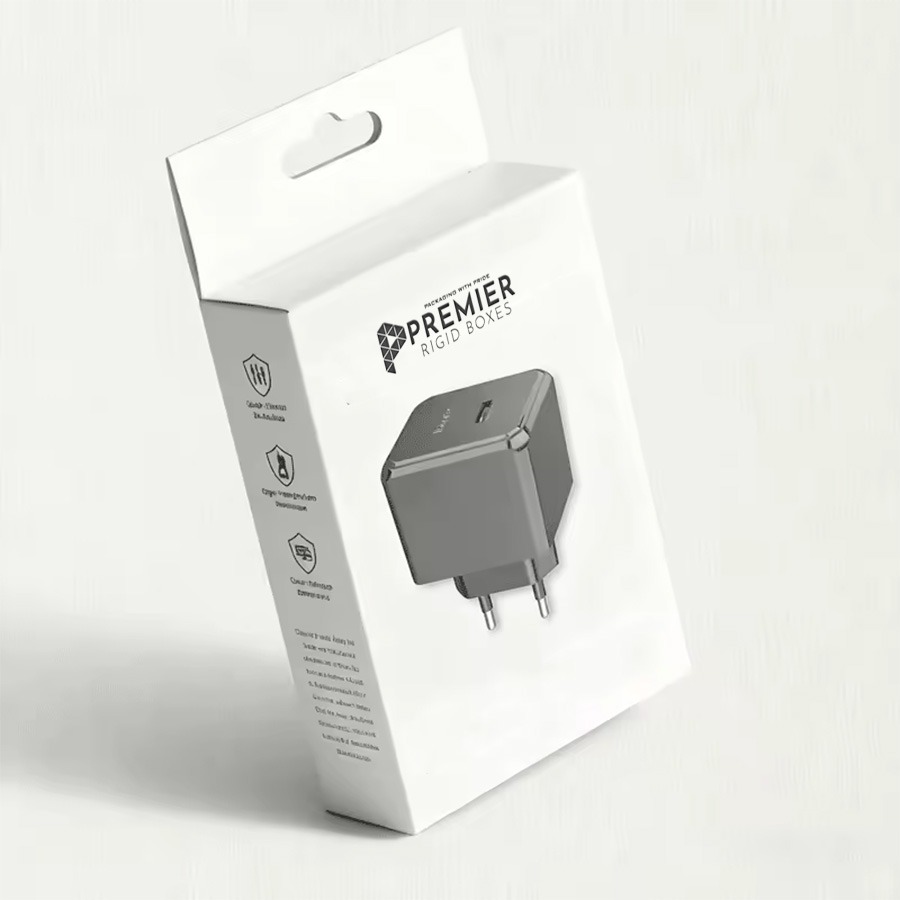
A guy I used to work with spent eight months developing a wireless charger. Solid product clean design, fast charging, priced right. He got a manufacturer, ran samples, passed quality checks. Then he ordered packaging from a generic supplier, and the boxes arrived with misaligned printing, corners that wouldn’t hold, and dimensions slightly off from the charger itself. The product shifted inside during shipping. A few arrived cracked.
He lost his first retail opportunity because the buyer opened a sample box and the charger slid around like it was lost in there.
I think about that story every time someone asks me why packaging manufacturing actually matters for tech products. A custom mobile charger box isn’t just a wrapper it’s a protection system, a brand statement, and a quality signal all compressed into something the customer holds before they ever touch your actual product. Getting that box made correctly is a process worth understanding from the inside out.
Step 1: Structural Design and Dieline Creation
Everything starts with a dieline a flat technical blueprint that shows exactly how the box will be cut, folded, and assembled. Think of it as the box unfolded completely flat, with every crease, cut, and tab mapped out with precision.
For a custom mobile charger box, the dieline has to account for the charger’s exact dimensions, the cable if it’s included, any accessories like adapters or documentation, and how much internal space is needed without the product moving around. Too tight and assembly becomes a fight. Too loose and the charger shifts, which creates unboxing disappointment and real shipping damage risk.
Structural engineers at the packaging manufacturer build this in software, then cut a physical prototype called a dummy or mock-up from plain board. No printing, no branding. Just the raw shape. This gets tested for fit, assembly ease, and structural integrity before a single color goes anywhere near it.
Most brands skip this step by ordering generic sizes. That’s how you end up with a charger rattling around in a box that technically fits but practically doesn’t.
Step 2: Material Selection
Once the structure is confirmed, material selection determines everything else durability, print quality, feel in hand, and final cost.
For a custom mobile charger box, the most common material is SBS board solid bleached sulfate which gives a smooth, bright white surface that takes printing exceptionally well. If the charger is positioned as premium, brands often upgrade to heavier board with a laminate coating on top. The laminate can be gloss, matte, or soft-touch, and each one sends a different message before the customer reads a word.
Corrugated board is used when the box will be shipping unprotected through carrier networks rather than sitting inside a master carton. The fluting inside corrugated adds cushioning that flat board doesn’t provide.
Getting the material wrong means either over-engineering an expensive box for a budget product, or under-building packaging that can’t protect what’s inside. Neither is free.
Step 3: Artwork Preparation and Pre-Press
The design file logo, typography, product photography, regulatory text, barcode, certifications goes through a pre-press process where technicians prepare it for the specific printing method being used.
Colors get converted from RGB to CMYK because printing works in physical inks, not screen light. Bleed areas get confirmed printing extends slightly beyond the cut line so no white edges appear if the cut shifts a millimeter. Trapping values get set so adjacent colors don’t leave tiny gaps between them.
For a custom mobile charger box, this stage also involves checking that the barcode scans correctly and that small compliance text like voltage ratings and certification marks are legible at print size. Failing a retail compliance scan at this stage is far cheaper than printing ten thousand boxes and discovering the barcode doesn’t work.
Step 4: Printing
Most custom mobile charger boxes are printed using offset lithography a process where inked plates transfer the image onto the board surface with precision that digital printing can’t fully match at volume. Colors are consistent across thousands of units in a way that matters when your boxes are sitting next to each other on a retail shelf.
Specialty finishes get applied at this stage or just after. Spot UV a glossy coating applied only to specific areas like the logo creates contrast against a matte background that customers notice and touch. Foil stamping uses heat and pressure to bond metallic film to the surface. Embossing and debossing push the board up or down to create texture.
For tech products especially, these finishes signal that the brand inside the box matches the quality of the hardware.
Step 5: Cutting, Folding, and Gluing
After printing, large printed sheets go through a die-cutting machine a press fitted with a custom-made die in the exact shape of the dieline from step one. The die cuts the box shape out cleanly, scores the fold lines precisely, and strips away the waste material.
From there, automated folders crease the box along every scored line, and gluing stations bond the structural tabs that hold the assembled box together. For a custom mobile charger box with a magnetic closure or ribbon pull, those components get added and tested at this stage.
Quality control happens throughout checking dimensions against spec, confirming adhesion on glued joints, verifying that lids sit flush and closures hold under repeated use.
Step 6: Inserts and Final Assembly
The box shell is done, but the inside needs to hold the charger securely. Custom-cut foam, molded pulp trays, or die-cut cardboard inserts get fitted to the exact shape of the charger, cable, and any included accessories.
A well-designed insert does two things simultaneously: it protects the product during shipping and it creates a reveal moment when the customer opens the box. The charger sitting flush in a precisely cut tray, surrounded by clean material, signals craftsmanship before anyone has read the specs.
This is the step my former colleague skipped. Generic box, no insert, charger loose inside. The manufacturing process exists to prevent exactly that outcome.
What the Process Actually Costs You If You Skip Steps
Every step above catches a problem before it becomes expensive. The die line catches a sizing issue before printing. Pre-press catches a barcode failure before production. Quality control catches a gluing defect before ten thousand units go into a warehouse.
A charger box built through this full process costs more per unit than a generic alternative, but it arrives performing exactly as intended. The charger fits. The box survives shipping. The customer’s first impression lands the way it should.