
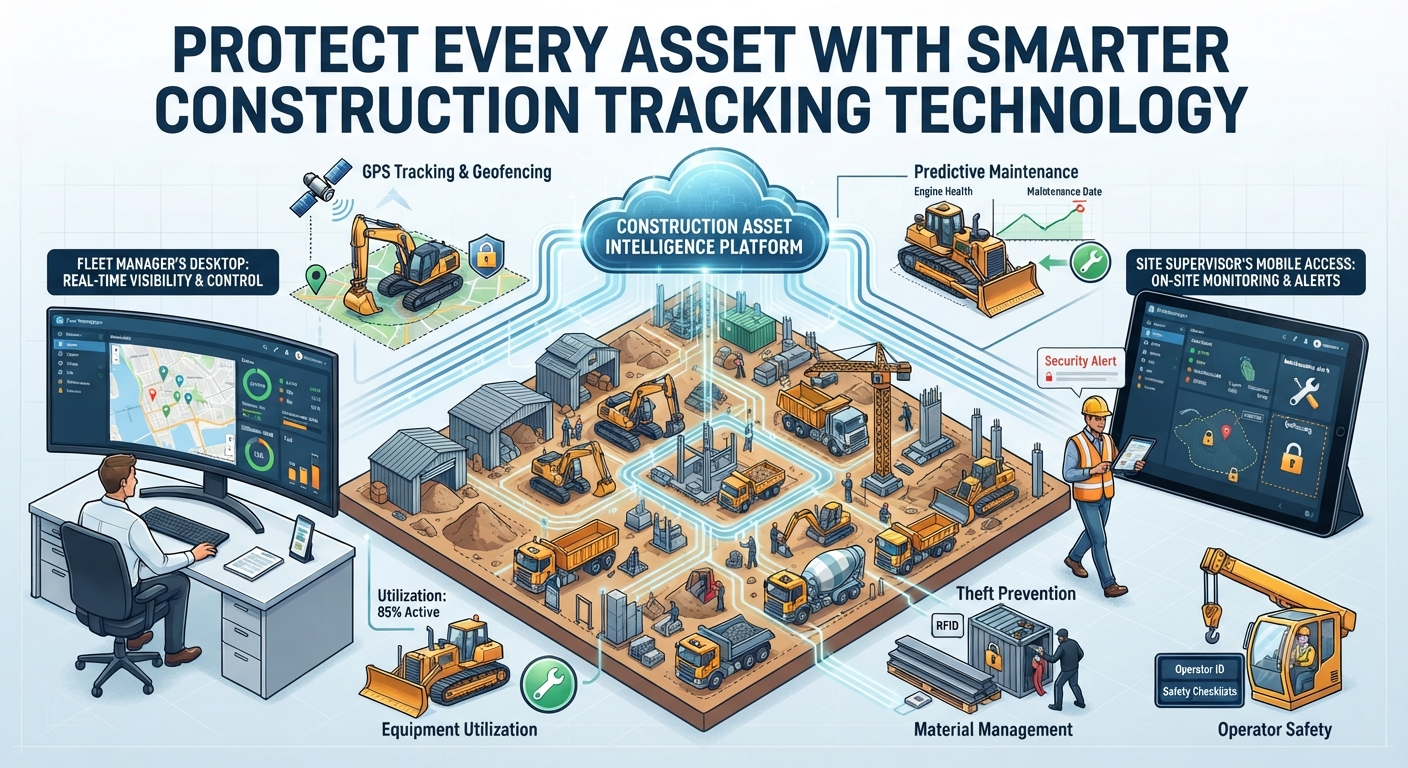
Construction companies invest heavily in equipment, tools, machinery, and materials to keep projects moving efficiently. From heavy equipment and specialized attachments to portable tools and high-value materials, every asset contributes to the success of a project. However, managing these assets across multiple jobsites can quickly become challenging without the right systems in place.
Lost equipment, misplaced tools, duplicate purchases, and inaccurate inventory records can lead to unnecessary expenses and project delays. As construction operations grow, manual asset tracking methods often fail to provide the visibility needed to manage resources effectively.
Construction asset tracking software helps contractors gain real-time insight into the location, status, and utilization of their assets. By replacing spreadsheets and paper-based records with a centralized digital system, construction companies can improve accountability, reduce losses, and optimize daily operations.
Why Asset Tracking Matters in Construction
Construction assets are constantly moving between warehouses, storage yards, maintenance facilities, and active jobsites. Without accurate tracking, it becomes difficult to know where equipment is located, who is using it, or whether it is available for the next project.
Poor asset visibility can lead to:
- Lost or misplaced equipment
- Unnecessary equipment purchases
- Increased rental costs
- Delayed project schedules
- Reduced workforce productivity
- Higher operating expenses
A modern asset tracking system provides the visibility needed to keep projects running smoothly while protecting valuable investments.
The Challenges of Manual Asset Management
Many construction companies still rely on spreadsheets, handwritten logs, or manual inventory updates to track their assets. While these methods may work for smaller operations, they become increasingly unreliable as fleets and inventories expand.
Common challenges include:
Limited Asset Visibility
Without centralized information, project managers often struggle to determine where assets are located.
Inaccurate Inventory Records
Manual updates are prone to human error, resulting in outdated or incomplete information.
Time-Consuming Asset Searches
Workers may spend valuable time locating tools or equipment instead of completing productive work.
Poor Resource Allocation
Without accurate availability data, assets may sit idle while other projects rent or purchase additional equipment.
These challenges increase operational costs and reduce overall efficiency.
How Asset Tracking Software Improves Visibility
Construction asset tracking software provides a centralized platform where companies can monitor all assets across multiple locations.
The software allows organizations to:
- Track asset locations in real time
- Monitor equipment availability
- View asset movement history
- Manage inventory more efficiently
- Maintain accurate asset records
Having a single source of accurate information helps managers make faster and more informed decisions.
Preventing Asset Loss and Theft
Construction sites often contain expensive equipment and valuable tools, making asset security a major concern.
Without proper tracking, misplaced or stolen assets may go unnoticed until they are urgently needed.
Construction asset tracking software improves accountability by:
- Recording asset movement
- Monitoring where assets are assigned
- Maintaining ownership records
- Reducing unauthorized equipment transfers
- Improving inventory accuracy
Better visibility helps companies reduce unnecessary replacement costs and protect valuable resources.
Improving Equipment Utilization
Many construction companies own equipment that is not being used efficiently. Some assets remain idle while others are overused, creating unnecessary wear and increasing operating costs.
Construction asset tracking software helps organizations:
Identify Underutilized Assets
Managers can quickly determine which equipment is not being used effectively.
Balance Equipment Allocation
Assets can be reassigned to projects where demand is higher.
Reduce Duplicate Purchases
Knowing what equipment is already available prevents unnecessary spending.
Maximize Return on Investment
Better utilization allows companies to get more value from existing assets before investing in additional equipment.
Streamlining Inventory Management
Construction projects require thousands of individual tools, materials, and equipment components. Managing inventory manually can be both time-consuming and inaccurate.
Asset tracking software simplifies inventory management by helping companies:
- Maintain accurate inventory records
- Track asset availability
- Reduce stock shortages
- Improve material planning
- Support faster equipment allocation
Accurate inventory information ensures that teams have the resources they need without unnecessary delays.
Supporting Maintenance Planning
Asset tracking is closely connected to equipment maintenance. Knowing where equipment is located and how frequently it is used helps maintenance teams schedule servicing more effectively.
Construction asset tracking software supports maintenance by:
- Recording equipment usage
- Monitoring service history
- Tracking inspection schedules
- Improving maintenance planning
- Reducing unexpected equipment failures
Well-maintained assets remain productive for longer while reducing repair costs and downtime.
Better Decision-Making Through Data
Successful construction management depends on accurate information.
Construction asset tracking software provides valuable insights such as:
- Asset utilization rates
- Equipment availability
- Movement history
- Inventory status
- Maintenance records
- Asset lifecycle data
These reports help business leaders make informed decisions about purchasing, maintenance, equipment allocation, and long-term planning.
Increasing Productivity Across Multiple Jobsites
Large construction companies often manage several projects at the same time. Coordinating equipment across different locations can become difficult without centralized visibility.
Asset tracking software improves coordination by allowing managers to:
- Locate equipment instantly
- Transfer assets between jobsites efficiently
- Reduce delays caused by unavailable equipment
- Improve communication between office and field teams
- Plan future equipment needs with greater confidence
This level of visibility helps keep projects on schedule while reducing operational disruptions.
Building a More Efficient Construction Operation
Construction companies that rely on manual asset management often spend unnecessary time and money dealing with missing equipment, duplicate purchases, and inaccurate records.
Digital asset tracking provides the visibility needed to improve accountability, simplify resource planning, and increase operational efficiency.
As construction projects continue to grow in complexity, centralized asset management becomes an increasingly valuable part of day-to-day operations.
Final Thoughts
Managing construction assets effectively is essential for controlling costs, improving productivity, and delivering projects on time. Manual tracking methods often create unnecessary challenges that reduce efficiency and make it difficult to maintain complete visibility across multiple jobsites.
By implementing construction asset tracking software, contractors can monitor asset locations, improve equipment utilization, reduce losses, simplify inventory management, and make data-driven decisions with confidence. A smarter asset tracking strategy not only protects valuable investments but also helps construction companies build more efficient, organized, and profitable operations for the future.
