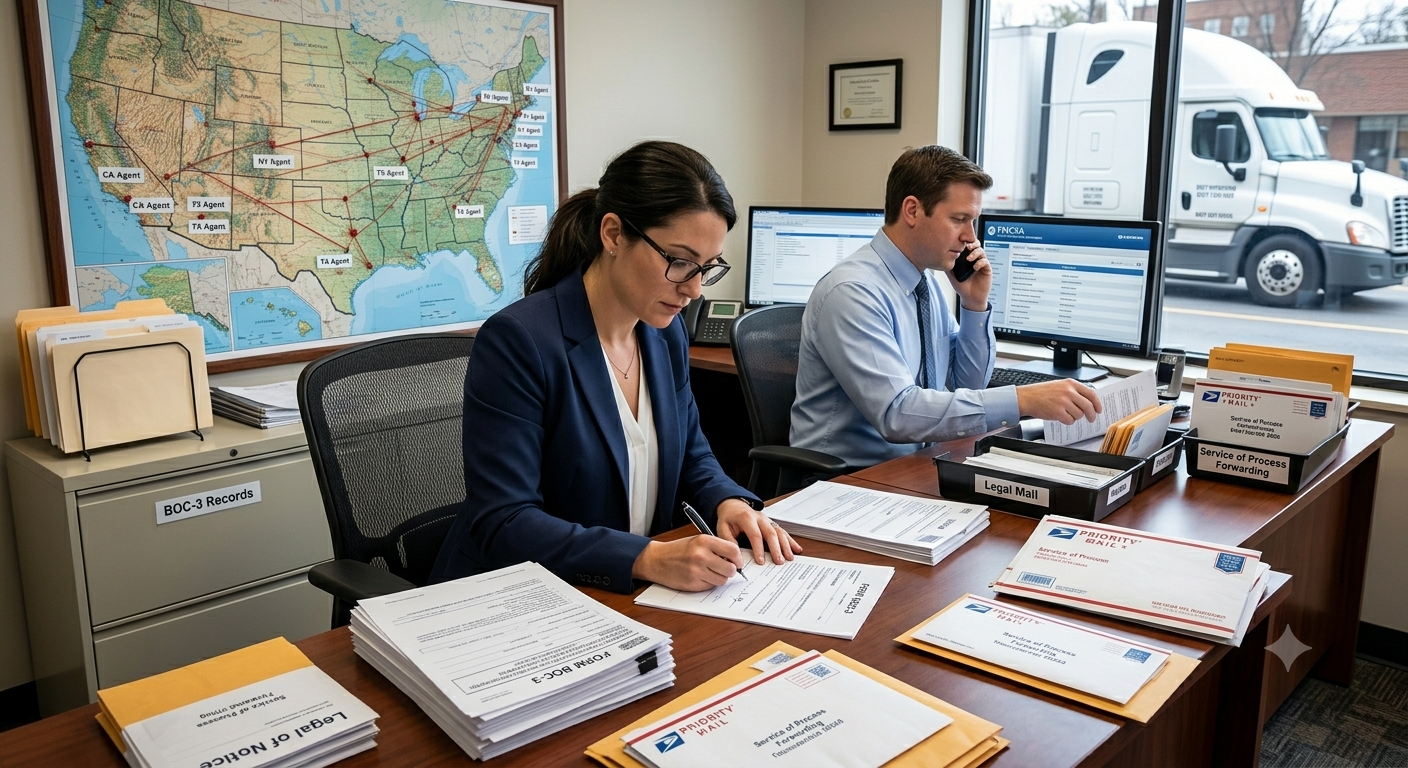
Understanding the Importance of BOC-3 Process Agents
Entering the transportation industry as a freight broker or motor carrier requires more than securing customers and obtaining operating authority. One of the most important federal compliance requirements is filing a BOC-3 form. While many new transportation professionals focus on insurance, licensing, and authority activation, the role of BOC-3 process agents is often overlooked. However, without a properly filed BOC-3, the Federal Motor Carrier Safety Administration (FMCSA) will not activate your authority, preventing you from legally operating your business.
A BOC-3 filing serves as a crucial legal safeguard that ensures transportation companies can receive official legal and regulatory documents regardless of where they operate. For freight brokers and carriers conducting business across multiple states, having designated process agents is not only a legal requirement but also an important component of maintaining professional operations and regulatory compliance.
What Exactly Is a BOC-3 Filing?
A BOC-3, also known as the Designation of Process Agents form, is a federal filing required by the FMCSA for freight brokers, motor carriers, and freight forwarders. The purpose of this filing is to designate legal representatives, known as process agents, who can accept legal documents on behalf of a transportation company.
Because trucking and logistics businesses often operate across state lines, federal regulations require companies to have authorized representatives available to receive legal notices in every state where business activities may occur. These representatives ensure that important legal communications reach the company promptly and efficiently.
Without an active BOC-3 filing, a transportation company cannot complete the FMCSA authority activation process, making this filing one of the most important compliance steps for new entrants into the industry.
The Critical Role of Process Agents in the Transportation Industry
Process agents act as official points of contact for legal matters involving freight brokers and carriers. Their primary responsibility is to receive and forward legal documents to the company they represent. These documents may include court summons, legal complaints, regulatory notices, administrative orders, and other official correspondence.
The transportation industry operates across vast geographic regions, making it impractical for courts and government agencies to locate business owners in every jurisdiction. Process agents solve this challenge by providing a reliable and accessible contact point in each state. This system helps ensure legal transparency and accountability while protecting the rights of all parties involved in transportation-related disputes.
Why Freight Brokers and Carriers Need BOC-3 Process Agents
Federal transportation regulations are designed to promote accountability and facilitate legal communication between transportation companies and government agencies. Since freight brokers and motor carriers often conduct business nationwide, regulators need a consistent method for delivering legal documents when necessary.
BOC-3 process agents provide this essential communication network. They help transportation companies remain accessible to legal authorities while supporting compliance with FMCSA requirements. For brokers and carriers, having designated process agents reduces the risk of missed legal notices and ensures that important documents are received and handled promptly.
Furthermore, the BOC-3 requirement demonstrates a company’s commitment to operating legally and professionally within the transportation industry.
The BOC-3 Filing Process Explained
The process of obtaining a BOC-3 filing is generally straightforward when working with an authorized filing company. After receiving an MC Number from the FMCSA, the applicant selects a process agent service provider. The provider then designates representatives across the required states and electronically submits the BOC-3 filing to the FMCSA.
Once the filing is accepted, it becomes part of the company’s official FMCSA record. In most cases, the process can be completed quickly, allowing businesses to move forward with authority activation and begin operations.
Although the filing itself may seem simple, choosing a reputable provider is essential to ensure compliance and avoid unnecessary delays.
Common Misunderstandings About BOC-3 Requirements
Many first-time freight brokers and carriers misunderstand the purpose of the BOC-3 filing. One common misconception is that the BOC-3 serves as a form of insurance coverage. In reality, it has nothing to do with insurance. Instead, it functions as a legal designation of representatives who can receive official documents on behalf of a company.
Another misconception is that only trucking companies require a BOC-3 filing. Freight brokers and freight forwarders must also complete this requirement before their authority can become active. Additionally, some business owners mistakenly believe they can personally file the BOC-3 form. However, FMCSA regulations generally require filings to be submitted through authorized process agent companies.
Understanding these distinctions can help transportation professionals avoid confusion and ensure compliance from the beginning.
Consequences of Failing to Maintain Compliance
Failure to maintain proper BOC-3 compliance can create significant challenges for freight brokers and carriers. Without a valid filing, operating authority activation may be delayed or denied. In addition, missed legal notices can result in serious consequences, including default judgments, fines, or regulatory actions.
Transportation companies operate in a highly regulated environment where compliance plays a vital role in business continuity. Maintaining accurate records, updating company information when necessary, and ensuring all regulatory filings remain current are essential practices for long-term success.
Businesses that prioritize compliance are generally better positioned to build credibility, attract customers, and avoid unnecessary legal complications.
Choosing the Right BOC-3 Filing Service
Not all process agent providers offer the same level of service and support. When selecting a BOC-3 filing company, freight brokers and carriers should consider factors such as industry experience, filing speed, customer service quality, and overall reputation.
A reliable provider should have a strong understanding of FMCSA requirements and maintain a nationwide network of process agents. Transparent pricing, responsive customer support, and efficient filing procedures are also important considerations.
Working with an experienced provider can simplify the startup process and provide valuable guidance for transportation companies navigating federal compliance requirements for the first time.
How BOC-3 Process Agents Support Long-Term Business Success
Although the BOC-3 filing is often viewed as a one-time regulatory requirement, its impact extends far beyond authority activation. Process agents play an ongoing role in helping transportation businesses remain legally accessible and compliant throughout their operations.
For growing freight brokers and carriers, maintaining proper legal representation across multiple states supports professional credibility and operational stability. As businesses expand their service areas and customer base, having a reliable compliance foundation becomes increasingly important.
Transportation companies that invest in proper compliance infrastructure from the beginning often experience smoother growth and fewer regulatory challenges over time.
Final Thoughts
BOC-3 process agents are a critical component of the transportation industry’s regulatory framework. Whether you are launching a freight brokerage, starting a trucking company, or expanding your logistics operations, understanding the purpose and importance of the BOC-3 filing is essential.
By designating qualified process agents and maintaining compliance with FMCSA requirements, freight brokers and carriers can activate their operating authority, receive important legal communications, and build a strong foundation for future growth. While the filing process itself may seem straightforward, selecting a reputable provider and understanding your ongoing compliance responsibilities can make a significant difference in the long-term success of your transportation business.
For anyone entering the freight and logistics industry, BOC-3 process agents are not simply a regulatory requirement—they are an important partner in maintaining legal compliance and supporting sustainable business operations.