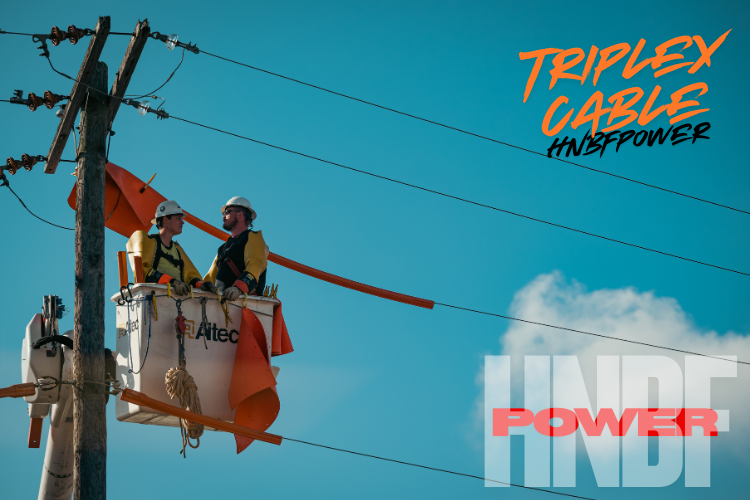
As power utilities, contractors, and infrastructure developers seek more efficient and cost-effective methods for electrical distribution, selecting the right conductor system becomes increasingly important. One product that continues to see strong demand in residential, commercial, and utility power networks is the triplex cable.
Designed for overhead secondary power distribution, triplex cable offers a practical combination of durability, safety, and installation efficiency. Whether used in new utility projects, residential developments, or rural electrification programs, triplex cable provides a dependable solution for delivering electricity from distribution transformers to service entrances.
In this guide, we will explore what triplex cable is, how it works, its applications, key advantages, and important factors procurement teams should consider when selecting a supplier.
What Is Triplex Cable?
Triplex cable is an overhead power distribution cable consisting of three conductors twisted together. Typically, it includes:
- Two insulated phase conductors
- One bare neutral messenger conductor
The messenger conductor serves both as a neutral conductor and as the mechanical support for the cable assembly.
Triplex cables are commonly manufactured using aluminum conductors due to their excellent conductivity-to-weight ratio and cost efficiency. Cross-linked polyethylene (XLPE) or polyethylene (PE) insulation is generally used to provide environmental protection and electrical insulation.
How Triplex Cable Works
Triplex cable is primarily used for secondary power distribution systems. Electricity is transmitted from a distribution transformer to homes, commercial buildings, and small industrial facilities.
The cable design allows:
- Reliable electrical transmission
- Reduced installation complexity
- Lower maintenance requirements
- Improved safety compared to bare conductor systems
The twisted construction also helps maintain conductor spacing and minimizes the risk of conductor contact during operation.
Key Components of Triplex Cable
Phase Conductors
The two insulated phase conductors carry electrical current from the transformer to the customer connection point.
Common features include:
- Aluminum conductor construction
- XLPE insulation
- Weather-resistant properties
- UV resistance
Neutral Messenger Conductor
The neutral messenger conductor provides:
- Neutral current return path
- Mechanical support for the cable assembly
- Improved structural stability during installation
Depending on project requirements, the messenger may be constructed using AAC, AAAC, or ACSR conductors.
Insulation System
The insulation protects the conductors from environmental factors such as:
- Moisture
- UV exposure
- Temperature fluctuations
- Mechanical abrasion
High-quality insulation contributes significantly to cable longevity and system reliability.
Major Applications of Triplex Cable
Residential Power Distribution
Triplex cable is widely used to connect distribution transformers to residential service entrances.
Benefits include:
- Reliable energy delivery
- Lower installation costs
- Reduced maintenance requirements
Rural Electrification Projects
Many rural electrification programs rely on triplex cable because of its ease of installation and cost efficiency.
Its lightweight construction allows utilities to expand networks quickly across large geographic areas.
Commercial Developments
Commercial buildings often use triplex cable for overhead service connections where underground installation is not practical or economically feasible.
Utility Distribution Networks
Electric utilities utilize triplex cable in secondary distribution systems to improve operational efficiency and service reliability.
Advantages of Using Triplex Cable
Enhanced Installation Efficiency
Triplex cable combines multiple conductors into a single assembly, reducing installation time compared to separate conductor installations.
Utility contractors can complete projects faster while minimizing labor costs.
Improved Safety
The insulated phase conductors reduce the risk of accidental contact and electrical faults.
This makes triplex cable particularly suitable for residential and populated areas.
Cost-Effective Distribution Solution
Compared with underground cable systems, overhead triplex installations generally require:
- Lower material costs
- Reduced excavation work
- Faster deployment
- Simplified maintenance
These factors contribute to lower overall project expenses.
Excellent Weather Resistance
Modern triplex cables are designed to withstand challenging environmental conditions, including:
- High temperatures
- Heavy rainfall
- UV radiation
- Wind exposure
This durability ensures long-term performance in diverse climates.
Reduced Maintenance Requirements
The robust construction and insulated design help reduce service interruptions and maintenance interventions throughout the cable’s operational life.
Triplex Cable vs Duplex Cable
Many buyers compare triplex cable with duplex cable when planning distribution projects.
Duplex Cable
Duplex cable generally consists of:
- One insulated phase conductor
- One messenger conductor
It is commonly used for street lighting and certain service drop applications.
Triplex Cable
Triplex cable includes:
- Two insulated phase conductors
- One neutral messenger conductor
This configuration supports single-phase three-wire service systems commonly found in residential power distribution.
For most residential utility connections, triplex cable offers greater functionality and flexibility.
Important Factors When Selecting Triplex Cable
Conductor Material
Aluminum remains the preferred choice due to:
- Lower weight
- Excellent conductivity
- Cost efficiency
- Corrosion resistance
Ampacity Requirements
Engineers should calculate system load requirements carefully to ensure proper conductor sizing.
Selecting insufficient conductor capacity can lead to overheating and reduced system reliability.
Environmental Conditions
Project environments influence cable selection.
Factors to evaluate include:
- Ambient temperature
- Coastal exposure
- Industrial pollution
- UV intensity
- Mechanical loading conditions
Compliance with Standards
High-quality triplex cable should meet relevant international standards and utility specifications.
Compliance helps ensure:
- Electrical performance
- Safety
- Long-term reliability
- Regulatory acceptance
Supplier Experience
Working with an experienced manufacturer can significantly improve project outcomes.
Reliable suppliers provide:
- Technical support
- Custom engineering solutions
- Quality assurance
- Consistent product performance
Why Utilities and Contractors Choose HNBF Power
HNBF Power is a global manufacturer specializing in overhead conductors and power cable solutions for utility and infrastructure projects worldwide.
With extensive experience in power transmission and distribution applications, HNBF Power delivers high-quality triplex cable solutions designed to meet the requirements of utilities, EPC contractors, distributors, and electrical infrastructure developers.
Key advantages include:
- Advanced manufacturing capabilities
- Strict quality control systems
- Custom conductor configurations
- International project experience
- Reliable delivery schedules
- Technical engineering support
Whether supporting residential developments, rural electrification programs, or utility distribution networks, HNBF Power provides dependable cable solutions that help customers achieve long-term operational success.
Conclusion
Triplex cable remains one of the most practical and widely used solutions for overhead secondary power distribution. Its combination of safety, durability, installation efficiency, and cost-effectiveness makes it an essential component in modern electrical infrastructure projects.
For utilities, contractors, and procurement professionals seeking reliable power distribution systems, selecting a high-quality triplex cable can improve network performance while reducing lifecycle costs.
By partnering with an experienced manufacturer such as HNBF Power, project teams gain access to dependable products, technical expertise, and customized solutions that support successful power distribution projects worldwide.
Frequently Asked Questions
What is triplex cable used for?
Triplex cable is primarily used for overhead secondary power distribution, connecting transformers to residential, commercial, and utility service entrances.
What are the components of a triplex cable?
A triplex cable typically consists of two insulated phase conductors and one bare neutral messenger conductor twisted together.
Is triplex cable suitable for outdoor use?
Yes. Triplex cable is specifically designed for outdoor overhead installations and offers excellent resistance to weather, UV exposure, and environmental conditions.
Why is aluminum commonly used in triplex cable?
Aluminum provides a favorable balance of conductivity, lightweight performance, corrosion resistance, and cost efficiency, making it ideal for utility distribution applications.
How do I choose the right triplex cable size?
The correct cable size depends on factors such as load requirements, voltage levels, installation conditions, and utility specifications. Engineering calculations should be performed to ensure proper conductor selection.
Contact HNBF Power for Customized Triplex Cable Solutions
Looking for reliable triplex cable solutions for your next utility, commercial, or infrastructure project? Contact HNBF Power today to discuss your technical requirements. Our engineering team can provide customized cable specifications, expert guidance, and dependable manufacturing support to help ensure the success of your power distribution projects.